
Biden Brings Socialism to Washington
Arguing US consumers and workers have been harmed by Washington's easy acceptance of corporate consolidation, President Joe Biden announced Friday a wide-ranging effort to bolster antitrust enforcement.
Biden plans to sign an executive order promoting competition in the American economy, encompassing everything from rulings on Big Tech mergers to airline ticket pricing and hearing aid purchases, the White House said Friday.
"For decades, corporate consolidation has been accelerating," according to a fact sheet released by the White House that described the initiative as "a whole-of-government effort to promote competition in the American economy."
The document cited earlier moments in US history when presidents confronted corporate power, such as the trust busting push by President Theodore Roosevelt in the early 20th century that gave "the little guy a fighting chance."
The order outlines 72 initiatives across the federal government and announces the creation of a White House Competition council to monitor progress.
Among the measures, the order calls for greater scrutiny of mergers involving large tech companies, including so-called "killer acquisitions" that are meant to remove a competitive threat.
The plan also orders the Federal Trade Commission to establish rules on the surveillance and accumulation of data at tech firms and to ensure small businesses are given a better chance to compete with large companies that own and operate online retail marketplaces.
Other measures call for the Health and Human Services department to establish rules to allow hearing aids to be sold over the counter and to ensure more transparent disclosure of airline baggage fees and other ancillary charges.
The policy also includes provisions to protect workers from being forced to sign non-compete agreements when starting a new job and to ensure better competition in the freight rail and maritime shipping industries.
AI is the Neat Handwriting of the Illiterate
A model in the hands of someone who has read the filing and walked the plant is a clerk. The same model, speaking for someone who has done neither, is a disguise. On AI slop, phantom citations and factslop, why finish stopped being evidence of work, and the containment layer KXCO built so a machine cannot speak as the institution until a source is attached.
Worthship: Do Not Conform to the Age
Worthship is the older English word for worship, and it means to ascribe worth. Bishop Robert Barron preached Romans 12 on 30 August. This essay follows the text into the prison letters, and puts two questions to a graph: do the four readings of that Sunday agree, and was Paul free or in chains when he wrote about despair?
The Truth in All Its Ugliness Must Survive
A majority vote does not determine the truth. Consensus is a mood, gossip is a sport, and a model will write the pretty version for free. Why the ugly number has to survive, why a record beats a dashboard, and what KXCO was built to keep standing when the room changes its mind.
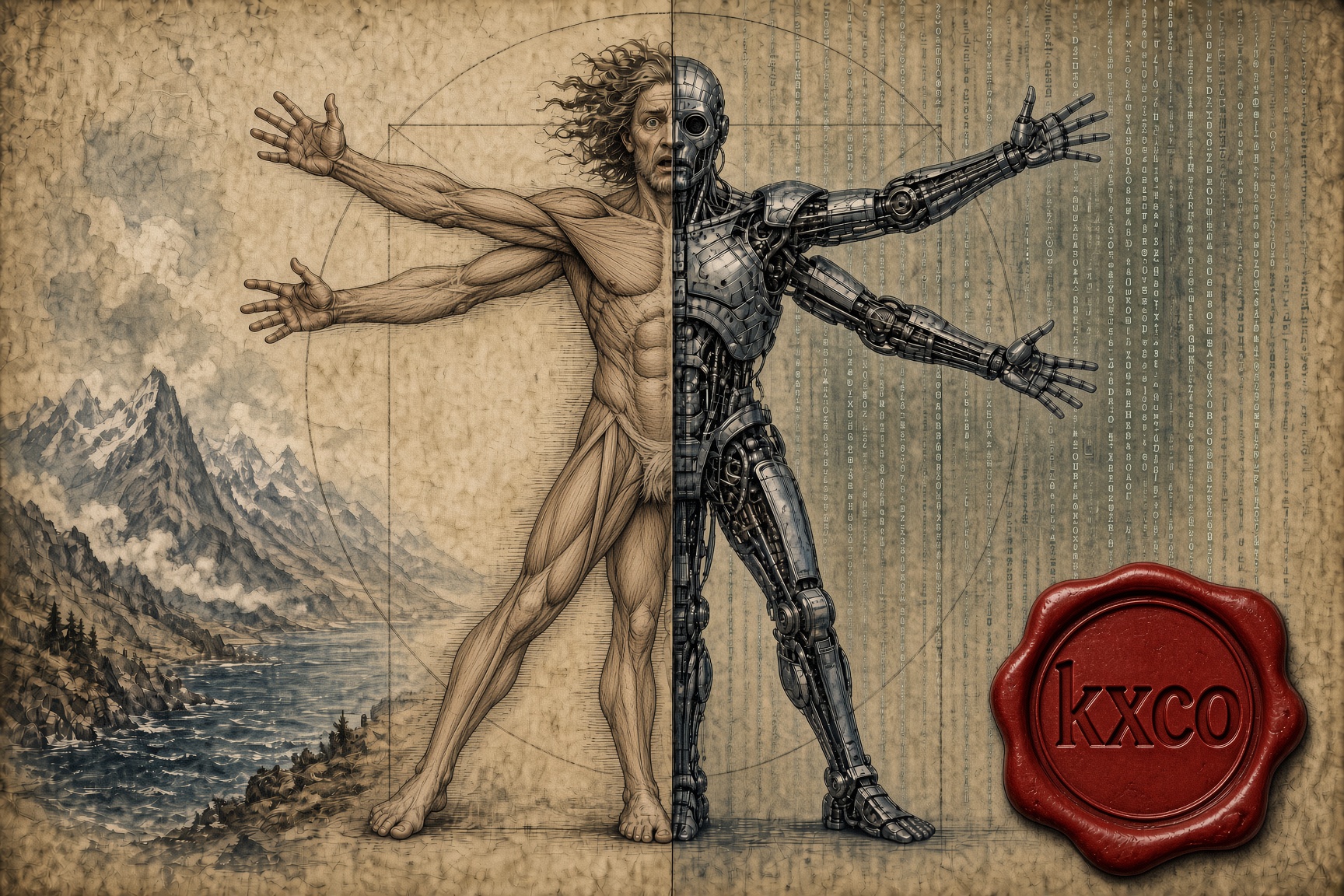
Don't Be the Best, Be the Only: Winning in an AI World
AI is repricing competence downward. What it cannot reproduce is a life. The case for remaining non-fungible, why friction still produces the best ideas, and what it means to build AI systems that keep the human intellect in them.
Every story, signed and delivered.
Subscribe to the kxco channel and get the headline, the AI-written key takeaways, and the chain-anchor link the moment we publish. Audio versions and per-ticker subscriptions arrive in the next iteration.