
Astronauts Arrive at International Space Station
NASA astronaut Mark Vande Hei and two Russian cosmonauts arrived at the International Space Station Friday, bringing its number of residents to 10 for the coming week.
The Soyuz MS-18 spacecraft carrying Vande Hei and cosmonauts Oleg Novitskiy and Pyotr Dubrov of the Russian space agency Roscosmos docked to the station's Rassvet module at 7:05 a.m. EDT. Docking occurred two orbits and about three hours after a 3:42 a.m. launch from the Baikonur Cosmodrome in Kazakhstan.
Vande Hei, Novitskiy, and Dubrov will join the Expedition 64 crew when hatches open about 9 a.m. Expedition 65, with NASA astronaut Shannon Walker as commander, will begin Friday, April 16, upon the departure of NASA's Kate Rubins, Roscosmos' Sergey Kud-Sverchkov, and departing station commander Sergey Ryzhikov. The trio will land in Kazakhstan following a six-month stay aboard the orbiting laboratory.
The change of command ceremony with all crew members is scheduled for 3:45 p.m. Thursday, April 15, and will air live on NASA Television, the NASA app, and the agency's website.
This marks the second spaceflight for Vande Hei, the third for Novitskiy, and the first for Dubrov. During a six-month stay aboard the orbiting laboratory, the trio will work on science and research in technology development, Earth science, biology, human research, and more.
During Expedition 65, the arrival of Crew-2 aboard the SpaceX Crew Dragon will bring four more members to the International Space Station. Crew-2 is currently scheduled for launch on Earth Day, Thursday, April 22. Crew-1, the first long-duration commercial crew mission, will return to Earth on April 28.
In November 2020, the International Space Station surpassed its 20-year milestone of continuous human presence, providing opportunities for unique technological demonstrations and research that help prepare for long-duration missions to the Moon and Mars while also improving life on Earth. To date, 243 people from 19 countries have visited the orbiting laboratory that has hosted nearly 3,000 research investigations from researchers in 108 countries and areas.
Follow Vande Hei on Twitter throughout his mission and get the latest space station crew news, images and features by following @space_station, and @ISS_Research on Twitter, as well as the ISS Facebook and ISS Instagram accounts and the space station blog.
AI is the Neat Handwriting of the Illiterate
A model in the hands of someone who has read the filing and walked the plant is a clerk. The same model, speaking for someone who has done neither, is a disguise. On AI slop, phantom citations and factslop, why finish stopped being evidence of work, and the containment layer KXCO built so a machine cannot speak as the institution until a source is attached.
Worthship: Do Not Conform to the Age
Worthship is the older English word for worship, and it means to ascribe worth. Bishop Robert Barron preached Romans 12 on 30 August. This essay follows the text into the prison letters, and puts two questions to a graph: do the four readings of that Sunday agree, and was Paul free or in chains when he wrote about despair?
The Truth in All Its Ugliness Must Survive
A majority vote does not determine the truth. Consensus is a mood, gossip is a sport, and a model will write the pretty version for free. Why the ugly number has to survive, why a record beats a dashboard, and what KXCO was built to keep standing when the room changes its mind.
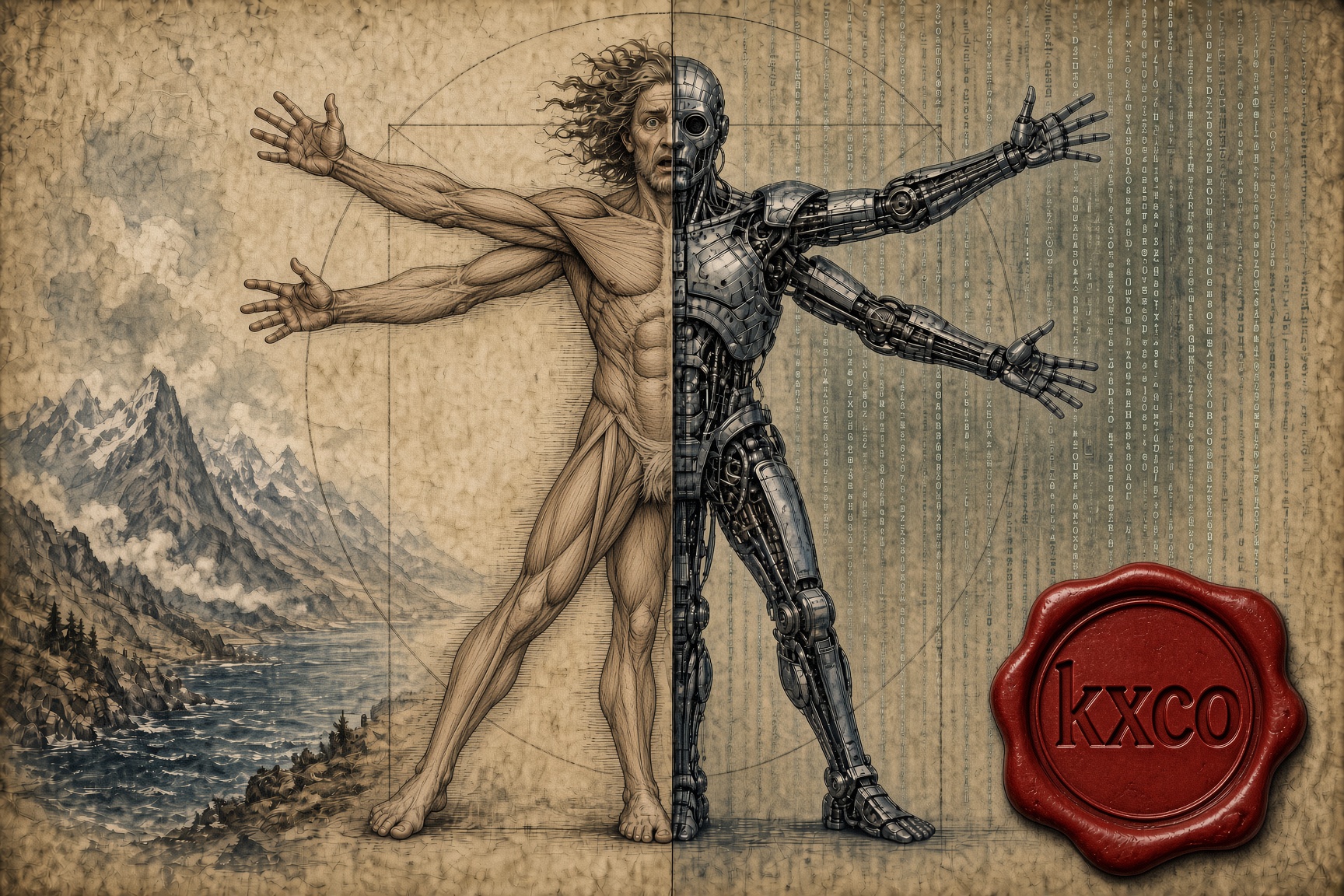
Don't Be the Best, Be the Only: Winning in an AI World
AI is repricing competence downward. What it cannot reproduce is a life. The case for remaining non-fungible, why friction still produces the best ideas, and what it means to build AI systems that keep the human intellect in them.
Every story, signed and delivered.
Subscribe to the kxco channel and get the headline, the AI-written key takeaways, and the chain-anchor link the moment we publish. Audio versions and per-ticker subscriptions arrive in the next iteration.