
Asia Hopeful of Recovery
Asian equities mostly rose Wednesday, continuing the recent volatile theme in global markets as optimism over the economic recovery and coronavirus vaccinations plays off against concerns about the fast-spreading Delta variant and China's regulatory crackdown.
A forecast-beating corporate earnings season and constant reassurance from the US Federal Reserve over its ultra-loose monetary policies have also been unable to soothe fears that the outlook might not be as rosy as initially hoped, with sentiment changing day by day.
Still, in the morning Wednesday was an up day following a record close for the S&P 500 on Wall Street and helped by some bargain-hunting.
The spread of the Delta virus variant remains the major stumbling block to the recovery as a sharp spike in new infections around the world forces some governments to reimpose strict containment measures.
And the main worry for markets is China, where millions of people have been put into lockdown and officials have announced travel restrictions in some areas.
The country had brought domestic cases down to virtually zero after the disease first emerged in Wuhan in late 2019, but it is now facing its worst outbreak in months.
"While China's resolve to control outbreaks has been well illustrated, markets will continue to watch the outbreak given the high transmissibility of the Delta variant," said National Australia Bank's Tapas Strickland.
"There are also concerns China's domestic vaccines are less effective against the Delta variant."
The brewing crisis in China has even led Nomura to cut its economic growth prediction for the third quarter and the year.
"The draconian measures taken by the government are resulting in potentially the most stringent travel bans and lockdowns in China since the spring of 2020," said Lu Ting, Nomura's chief economist for China, adding that recent deadly floods contributed to its decision.
- Delta 'won't stop recovery' -
Meanwhile, there is a worry that oil demand in the world's number two economy could tumble as a result of the tough new measures, putting downward pressure on prices.
However, analysts remained broadly optimistic that while Delta was a concern, it was unlikely to have as big an impact on growth as last year, even as the Infectious Diseases Society of America said the variant could push the threshold for herd immunity towards 90 percent, from 70 percent.
Laila Pence, of Pence Wealth Management, told Bloomberg TV: "We think the Delta variant is not going to stop the recovery, it's just going to delay it.
"The Federal Reserve is going to live with a lot more inflation. They don't want to derail the recovery."
In early trade, Hong Kong led gains as it jumped more than one percent though investors continue to fret over China's crackdown on a range of sectors including tech, private tuition and property.
There is a fear that gaming firms could be next after a state-run media article described online games as "spiritual opium".
Tencent, which has been hammered by the latest government moves, rose more than two percent Wednesday on bargain-buying though it is still down more than 20 percent since the start of last month.
Alibaba, another firm caught in the regulatory sweep, slipped slightly after announcing revenues fell short of forecasts for the first time in two years.
Shanghai, Sydney, Seoul, Singapore, Taipei, Wellington, Manila and Jakarta all rose, though Tokyo went into the break slightly lower.
AI is the Neat Handwriting of the Illiterate
A model in the hands of someone who has read the filing and walked the plant is a clerk. The same model, speaking for someone who has done neither, is a disguise. On AI slop, phantom citations and factslop, why finish stopped being evidence of work, and the containment layer KXCO built so a machine cannot speak as the institution until a source is attached.
Worthship: Do Not Conform to the Age
Worthship is the older English word for worship, and it means to ascribe worth. Bishop Robert Barron preached Romans 12 on 30 August. This essay follows the text into the prison letters, and puts two questions to a graph: do the four readings of that Sunday agree, and was Paul free or in chains when he wrote about despair?
The Truth in All Its Ugliness Must Survive
A majority vote does not determine the truth. Consensus is a mood, gossip is a sport, and a model will write the pretty version for free. Why the ugly number has to survive, why a record beats a dashboard, and what KXCO was built to keep standing when the room changes its mind.
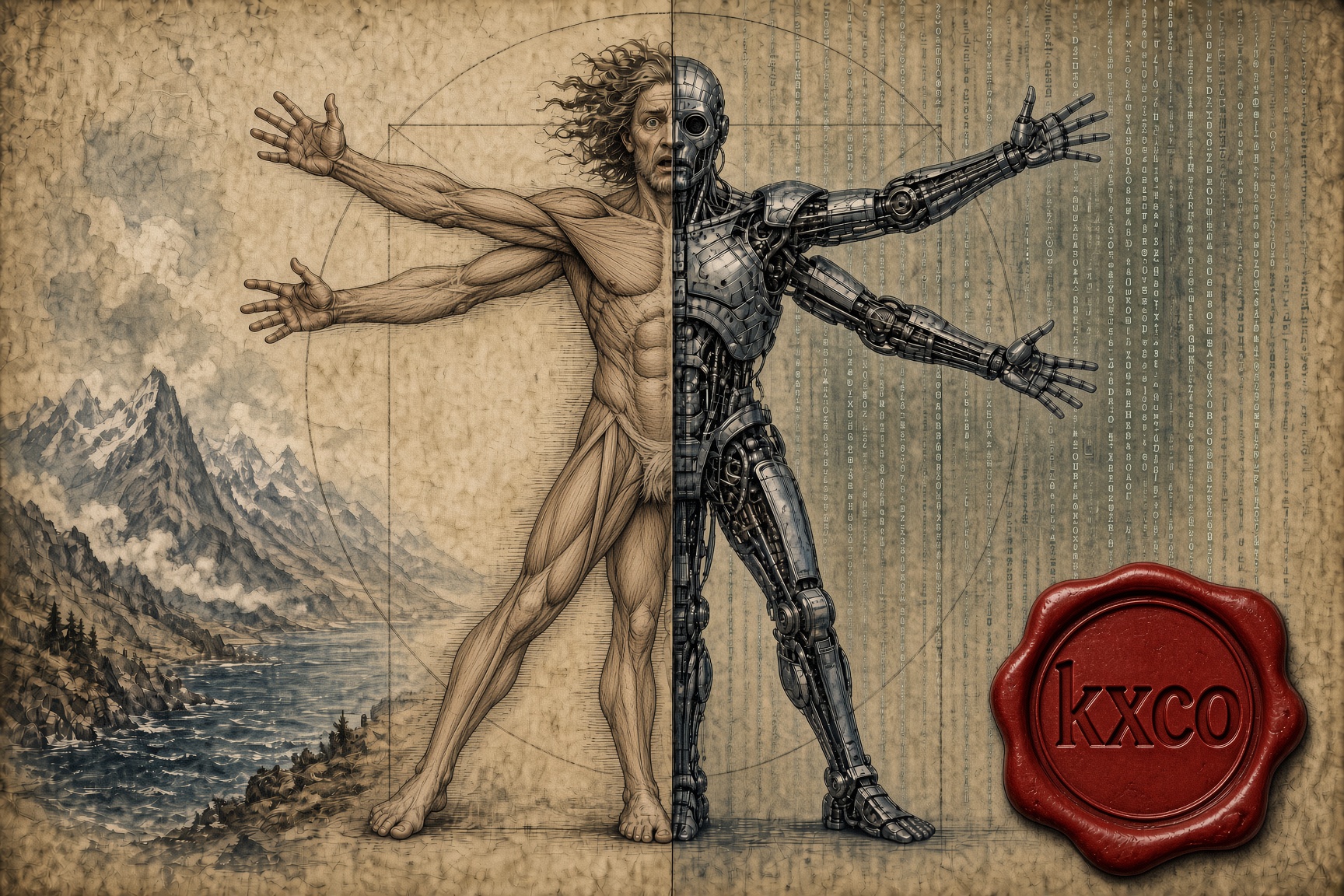
Don't Be the Best, Be the Only: Winning in an AI World
AI is repricing competence downward. What it cannot reproduce is a life. The case for remaining non-fungible, why friction still produces the best ideas, and what it means to build AI systems that keep the human intellect in them.
Every story, signed and delivered.
Subscribe to the kxco channel and get the headline, the AI-written key takeaways, and the chain-anchor link the moment we publish. Audio versions and per-ticker subscriptions arrive in the next iteration.