
America's Tribal Politics and the Road to Civil War
America's political scene has become increasingly fractured, with considerable ideological differences. The attempted assassination of former President Donald Trump has intensified emotions, emphasizing the growing divide between the left and right.
Reactions to Attempted Assassination
The left has had a variety of reactions to Trump's attempted assassination. While several criticized the violence, many cheered the attempt others blamed Trump's speech and actions that go against their beliefs of a left wing utopia. The degenerate left is willing to do anything at all to impose their will. This difference in reactions highlights the polarized nature of American politics.
Tribalism and American Politics
The concept of tribalism in politics refers to people's intense allegiance to their political group, which can lead to a "us vs. them" mindset. This phenomena is obvious in today's American political climate, where ideological divides are more pronounced than ever.
Media Influence: Both conservative and liberal media outlets have contributed to polarization by presenting news stories in ways that confirm their respective viewers' ideas. This has resulted in echo chambers, where people are rarely exposed to opposing ideas.
Social media platforms such as Twitter and Facebook have fueled tribalism by allowing users to personalize their news feeds, reinforcing their political ideas. Algorithms frequently push content that supports users' existing beliefs, making it simpler to disregard competing viewpoints.
Political Rhetoric: Politicians on both sides have been increasingly aggressive. Accusations of treason, corruption, and illegitimacy are prevalent, fostering distrust and enmity among the groups.
The Risk of Civil War
The notion that America's tribal politics could lead to civil war is debatable. However, multiple considerations indicate that the risk, while possibly not imminent, is not negligible:
Historical precedent: The American Civil War (1861-1865) was fueled by fundamental social, economic, and political divisions. While the backdrop has changed, the intensity of current differences has a superficial resemblance to the prewar period.
Armed Groups: The number of armed militias and extremist groups has increased on both sides of the political spectrum. These groups frequently demonstrate a readiness to use violence to attain their objectives, which raises concerns about potential conflicts.
Erosion of Democratic Norms: Mutual respect for democratic norms and processes is deteriorating. Allegations of election fraud, voter suppression, and attempts to undermine electoral integrity have increased, eroding the cornerstone of democratic government. Voter ID could solve many of these issues.
America's political tribalism has reached a point where, while the possibility of civil war remains real, it cannot be completely disregarded. The reactions to Trump's attempted assassination have exposed the vast differences that define the current political atmosphere. To prevent further escalation, leaders and individuals must participate in conversation, find common ground, and maintain democratic norms.
Shayne Heffernan
AI is the Neat Handwriting of the Illiterate
A model in the hands of someone who has read the filing and walked the plant is a clerk. The same model, speaking for someone who has done neither, is a disguise. On AI slop, phantom citations and factslop, why finish stopped being evidence of work, and the containment layer KXCO built so a machine cannot speak as the institution until a source is attached.
Worthship: Do Not Conform to the Age
Worthship is the older English word for worship, and it means to ascribe worth. Bishop Robert Barron preached Romans 12 on 30 August. This essay follows the text into the prison letters, and puts two questions to a graph: do the four readings of that Sunday agree, and was Paul free or in chains when he wrote about despair?
The Truth in All Its Ugliness Must Survive
A majority vote does not determine the truth. Consensus is a mood, gossip is a sport, and a model will write the pretty version for free. Why the ugly number has to survive, why a record beats a dashboard, and what KXCO was built to keep standing when the room changes its mind.
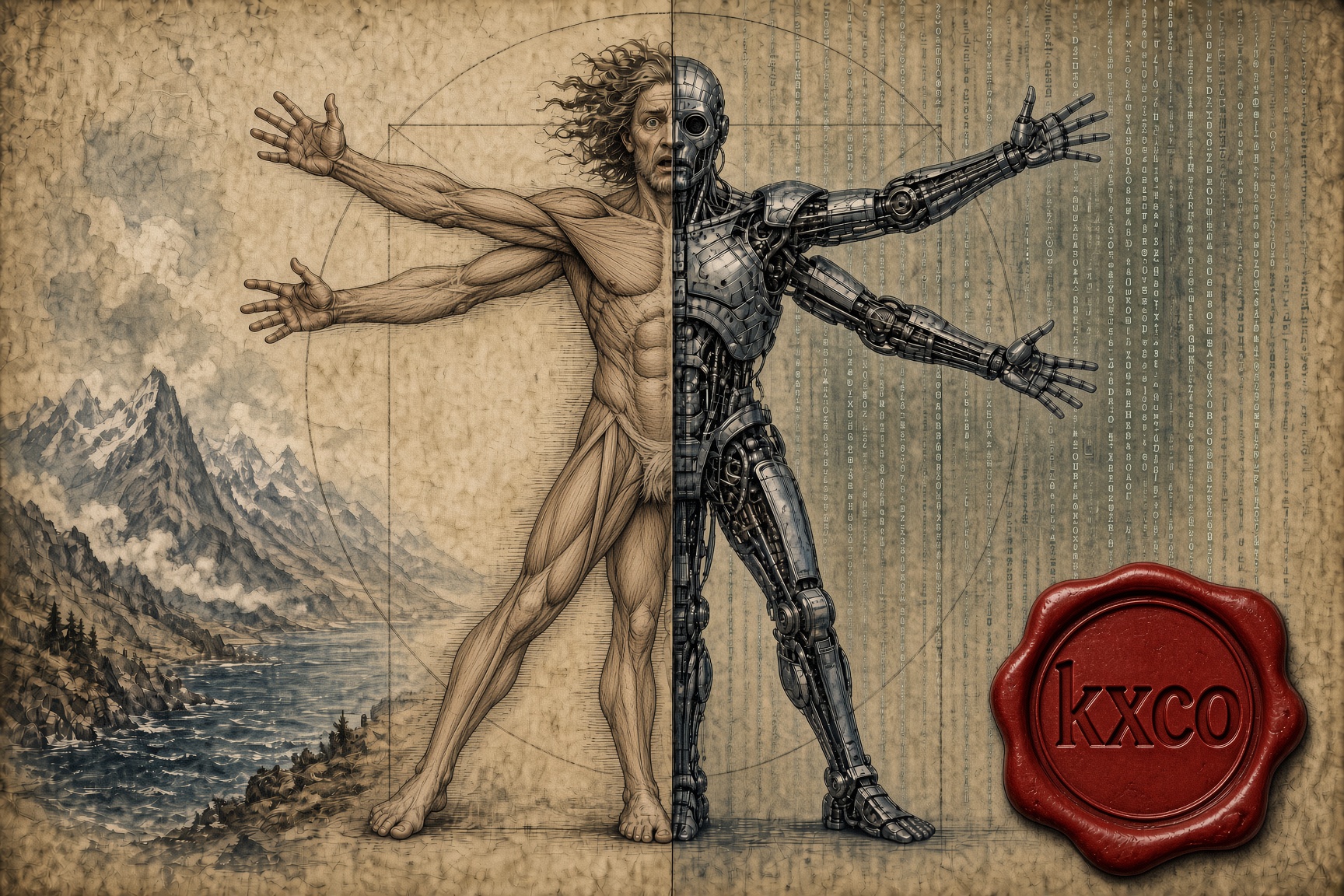
Don't Be the Best, Be the Only: Winning in an AI World
AI is repricing competence downward. What it cannot reproduce is a life. The case for remaining non-fungible, why friction still produces the best ideas, and what it means to build AI systems that keep the human intellect in them.
Every story, signed and delivered.
Subscribe to the kxco channel and get the headline, the AI-written key takeaways, and the chain-anchor link the moment we publish. Audio versions and per-ticker subscriptions arrive in the next iteration.