
Alibaba Still in Trouble in China
Beijing has asked Chinese e-commerce titan Alibaba to divest its assets in the media sector out of concern over the company's growing public influence, The Wall Street Journal reported Monday.
Its founder Jack Ma, the ebullient and unconventional billionaire who officially retired from Alibaba in 2019 but remains a large shareholder, has been in authorities' crosshairs in recent months.
In November, Chinese regulators halted a colossal $34 billion IPO by Ant Group, an Alibaba subsidiary for online payments. The following month, regulators opened an investigation into Alibaba business practices deemed anti-competitive.
Now authorities are asking the tech giant to drastically reduce its presence in the media sector, the Journal said, citing people familiar with the matter.
Alibaba is most notably the owner of Hong Kong's leading English-language daily, the South China Morning Post. It also has stakes in China's popular Twitter-like Weibo social media platform and online video platform Bilibili, as well as other media and advertising.
Chinese leaders are worried about growing influence on public opinion exerted by the company founded by Ma, the Journal reported.
The government didn't specify whether Alibaba was requested to completely withdraw from the media or divest part of its shares.
On Friday, the Journal reported that Alibaba risks being slapped with a record fine in China for anti-competitive practices, which could exceed the $975 million paid by US chip maker Qualcomm in 2015, the biggest anti-monopoly fine imposed by Beijing to date.
According to the article, authorities accuse Alibaba of preventing merchants who sell goods on the platform from also selling on rival websites.
AI is the Neat Handwriting of the Illiterate
A model in the hands of someone who has read the filing and walked the plant is a clerk. The same model, speaking for someone who has done neither, is a disguise. On AI slop, phantom citations and factslop, why finish stopped being evidence of work, and the containment layer KXCO built so a machine cannot speak as the institution until a source is attached.
Worthship: Do Not Conform to the Age
Worthship is the older English word for worship, and it means to ascribe worth. Bishop Robert Barron preached Romans 12 on 30 August. This essay follows the text into the prison letters, and puts two questions to a graph: do the four readings of that Sunday agree, and was Paul free or in chains when he wrote about despair?
The Truth in All Its Ugliness Must Survive
A majority vote does not determine the truth. Consensus is a mood, gossip is a sport, and a model will write the pretty version for free. Why the ugly number has to survive, why a record beats a dashboard, and what KXCO was built to keep standing when the room changes its mind.
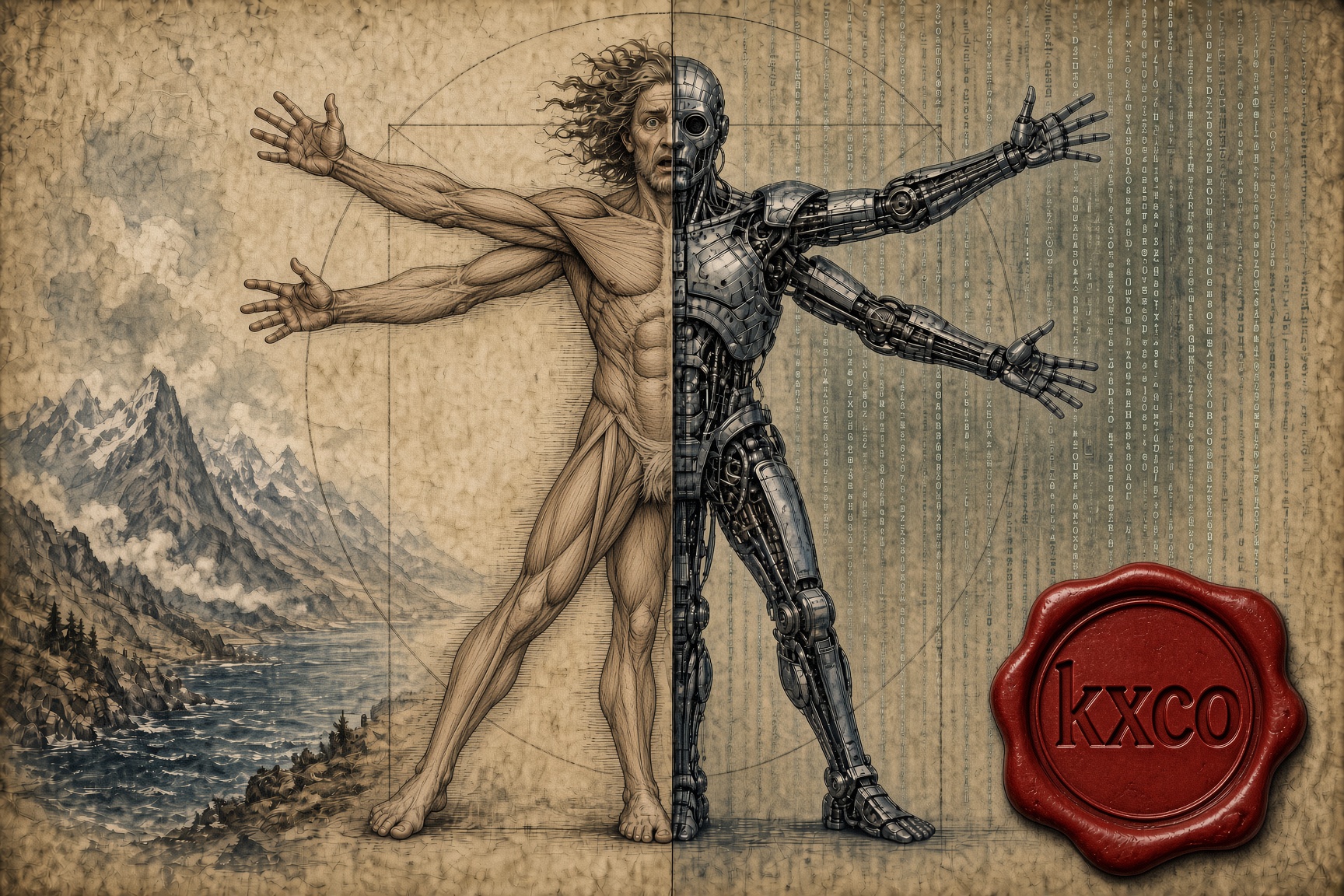
Don't Be the Best, Be the Only: Winning in an AI World
AI is repricing competence downward. What it cannot reproduce is a life. The case for remaining non-fungible, why friction still produces the best ideas, and what it means to build AI systems that keep the human intellect in them.
Every story, signed and delivered.
Subscribe to the kxco channel and get the headline, the AI-written key takeaways, and the chain-anchor link the moment we publish. Audio versions and per-ticker subscriptions arrive in the next iteration.