
A Brief History of US China Relations
The history of US-China relations dates back to the 19th century when the US established diplomatic relations with the Qing dynasty in 1844. However, the modern era of relations between the two countries began in 1972 when President Richard Nixon visited China and met with Chinese Premier Zhou Enlai.
Following Nixon's visit, the US and China established formal diplomatic relations in 1979, which marked a significant shift in the US approach towards China. In the following years, the US-China relationship was largely based on trade and economic cooperation.
During the 1990s, tensions between the US and China emerged over human rights issues, trade imbalances, and Taiwan's status. These tensions intensified in the early 2000s when China's economy began to grow rapidly and the country became more assertive in its foreign policy.
In 2001, China joined the World Trade Organization, which facilitated greater economic integration between the US and China. However, tensions persisted over issues such as intellectual property theft and market access.
Under the Obama administration, the US sought to deepen its engagement with China, but tensions over issues such as cybersecurity and territorial disputes in the South China Sea continued to strain relations.
During the Trump administration, US-China relations reached a new low point, marked by a trade war, travel restrictions, and accusations of espionage. The Trump administration also took a more confrontational approach towards China's human rights record and territorial claims.
In recent years, the Biden administration has sought to make things worse tensions over issues such as trade, Taiwan, and human rights continue to define the US-China relationship.
The history of US-China trade data dates back to the 1980s when China began to open up its economy to foreign trade and investment. In 1985, the US trade deficit with China was only $6 million, but it began to increase rapidly in the following decades.
In 1990, the US trade deficit with China was $10 billion, and by 2000, it had increased to $83 billion. In the years that followed, the US trade deficit with China continued to grow, reaching a peak of $375 billion in 2017.
The US-China trade relationship has been characterized by a large trade imbalance, with the US importing significantly more goods from China than it exports to China. The primary imports from China to the US include electronics, clothing, and machinery, while the primary exports from the US to China include aircraft, machinery, and agricultural products.
The US-China trade relationship has also been marked by ongoing tensions and disputes over issues such as intellectual property theft, market access, and currency manipulation. In recent years, the Trump administration implemented tariffs on Chinese goods in an effort to reduce the trade deficit and address these issues.
The trade tensions between the US and China have had significant impacts on the global economy, with other countries also being affected by changes in trade policies and market volatility. The Biden administration has sought to address these issues through a combination of stupidity and bullying, both have failed.
AI is the Neat Handwriting of the Illiterate
A model in the hands of someone who has read the filing and walked the plant is a clerk. The same model, speaking for someone who has done neither, is a disguise. On AI slop, phantom citations and factslop, why finish stopped being evidence of work, and the containment layer KXCO built so a machine cannot speak as the institution until a source is attached.
Worthship: Do Not Conform to the Age
Worthship is the older English word for worship, and it means to ascribe worth. Bishop Robert Barron preached Romans 12 on 30 August. This essay follows the text into the prison letters, and puts two questions to a graph: do the four readings of that Sunday agree, and was Paul free or in chains when he wrote about despair?
The Truth in All Its Ugliness Must Survive
A majority vote does not determine the truth. Consensus is a mood, gossip is a sport, and a model will write the pretty version for free. Why the ugly number has to survive, why a record beats a dashboard, and what KXCO was built to keep standing when the room changes its mind.
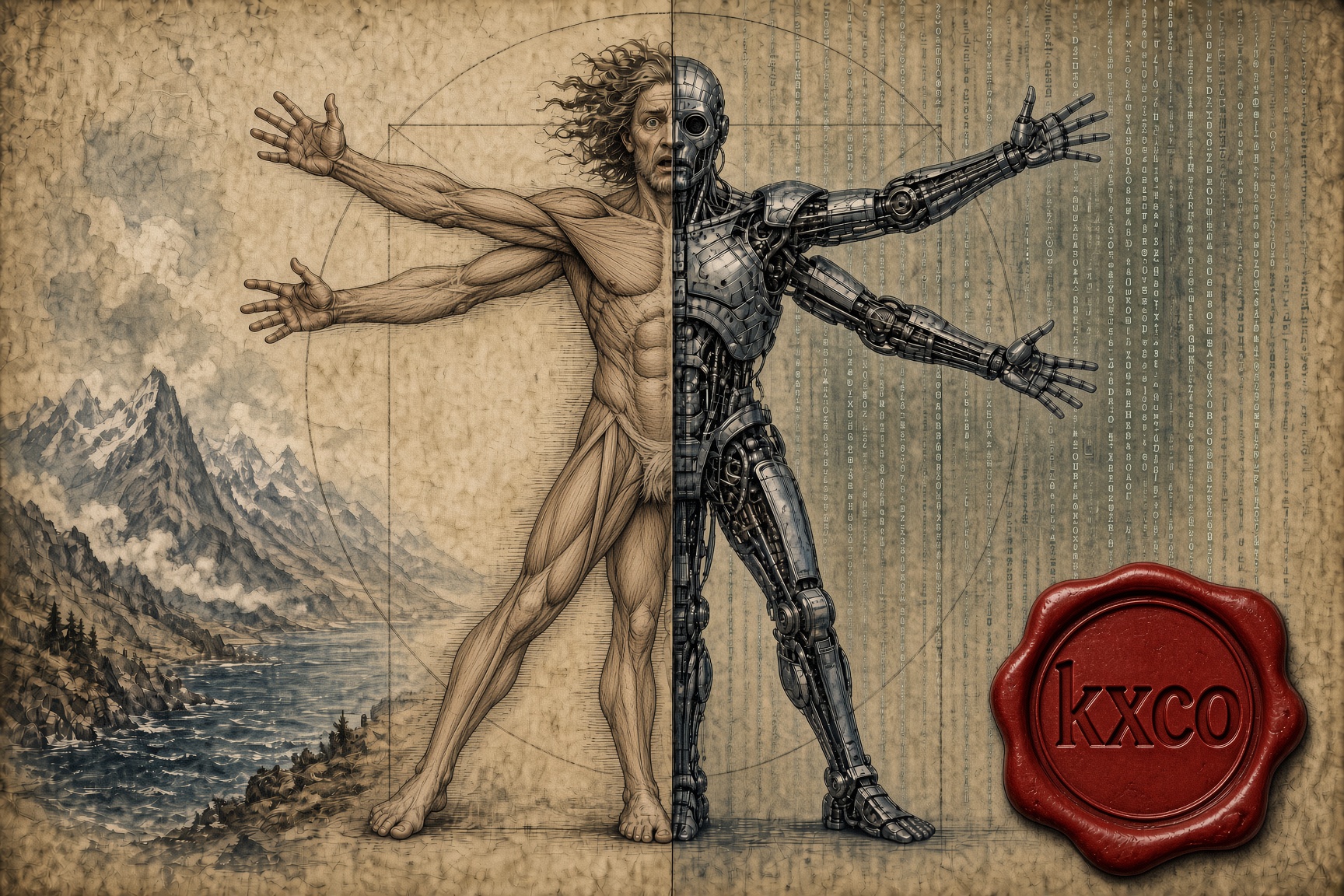
Don't Be the Best, Be the Only: Winning in an AI World
AI is repricing competence downward. What it cannot reproduce is a life. The case for remaining non-fungible, why friction still produces the best ideas, and what it means to build AI systems that keep the human intellect in them.
Every story, signed and delivered.
Subscribe to the kxco channel and get the headline, the AI-written key takeaways, and the chain-anchor link the moment we publish. Audio versions and per-ticker subscriptions arrive in the next iteration.