
Tokenized Assets for Wall Street
Why KXCO's environment is the best choice for tokenising a real-world asset: a post-quantum chain, every holder known, the rule applied before a unit moves, and a US-licensed market to sell into.

On KXCO the register is the record. It settles on Armature, KXCO's own chain, whose validators attest every finalised block with ML-DSA-87, the top security category in NIST FIPS 204, per the chain's validator page. The cryptography underneath it passed 2,130 test cases on NIST's own demonstration server with zero failures, certificate A11025, per KXCO. Those two facts are the base of everything that follows.
They matter because the regulators have started asking the right questions. ESMA's Chair, Verena Ross, put the first one to the fund industry on 12 June 2026: "is the DLT record the official register, or only an operational layer?" She also asked whether transfers are final on chain, or only once the transfer agent's books reflect them, per ESMA.
The Central Bank of Ireland's Discussion Paper 12 of 5 March 2026 described the answer it wants: units issued on a permissioned ledger operated by regulated entities, where the ledger "serves as the primary record of investor ownership, with token transfers subject to embedded eligibility and compliance rules", per the Central Bank. The SEC's staff statement of 28 January 2026 set out the data model for a tokenised security: on chain, the wallet address, the quantity and the issue date; off chain, the holder's name and address, per the SEC.
An asset is two things: a record of who owns it, and a rule for how it moves. KXCO puts both in one register, settles that register on a post-quantum chain, admits every holder by name, applies the rule before a unit moves, and gives the asset somewhere to sell. This piece takes the four in that order, because the first three are what sells the environment and the fourth is what closes. Exhibit 1 maps the questions the regulators have put to the market against the KXCO control that answers each one.
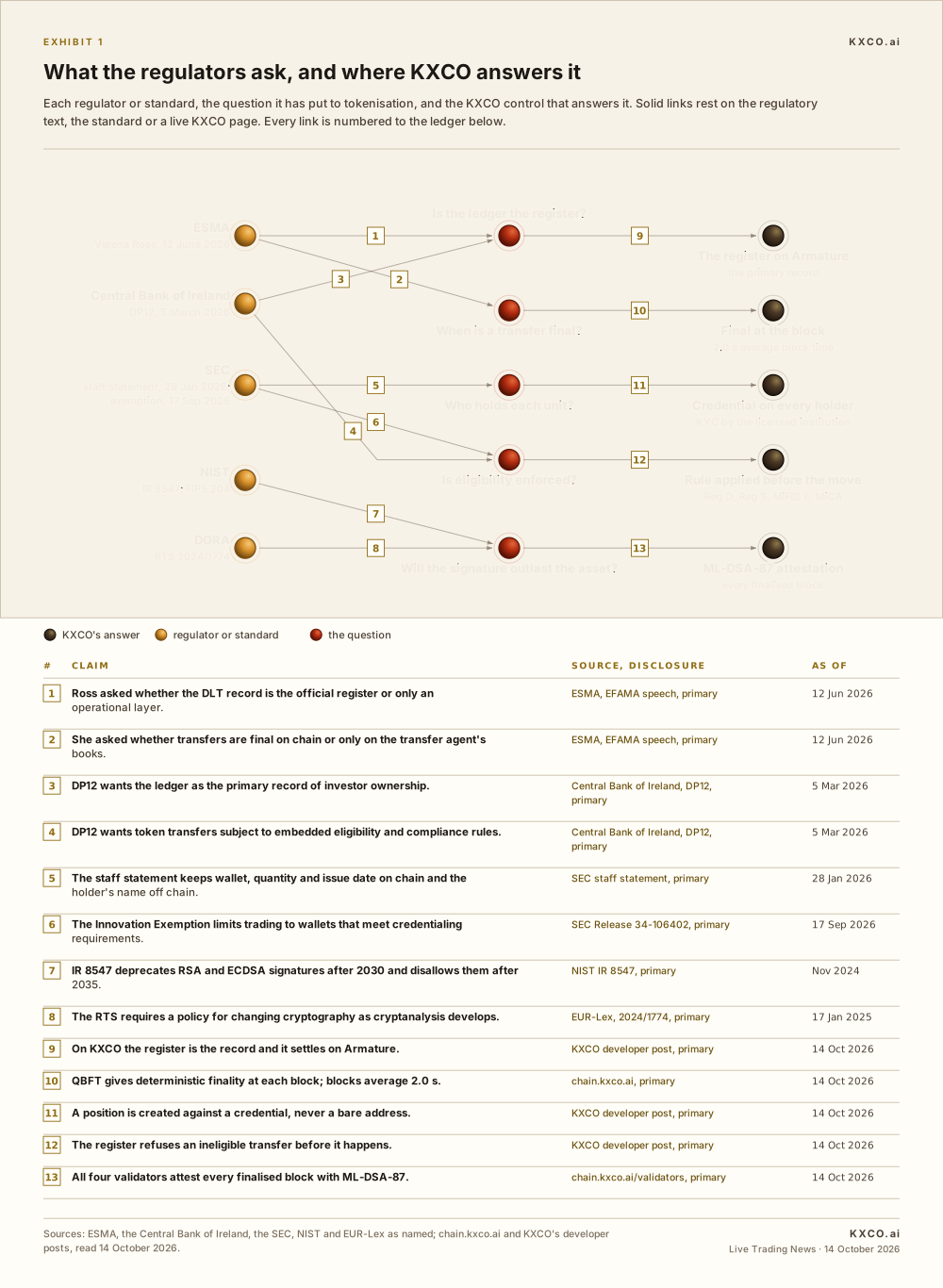
Exhibit 1. What the regulators ask, and where KXCO answers it. Each numbered link is a sourced claim, listed under the graph.
The security of the chain
A tokenised asset is a signed record, and a stranger has to be able to check that record for as long as the asset lives. A 30-year bond issued today has to prove who issued it, and to whom it moved, in 2056. NIST's transition plan deprecates RSA and ECDSA signatures after 2030 and disallows them after 2035, per NIST IR 8547. A signature in those schemes will not pass the 2056 test. ML-DSA-87 is built to.
Armature is a permissioned layer-one network with four named validators running QBFT consensus, on chain ID 1111111, with deterministic finality at each block, per the validator page. Blocks arrive every 2.0 seconds on average and the chain stood at block 5,285,096 when this piece was written on 14 October 2026, per its public statistics. The ML-DSA-87 verifier has run inside consensus since block 4,951,111 on 6 October 2026, so a transaction that checks an ML-DSA-87 signature is re-executed by each of the four validators before the block is final, per KXCO.
All four validators attest every finalised block with their own ML-DSA-87 keys, and the published key history lists every key, old and new, per the validator page. Block sealing itself still uses the classical consensus signature. Post-quantum consensus signing is on the published roadmap, and the same page says so.
The library behind it is open. KXCO publishes its post-quantum code under Apache 2.0 with signed build provenance, generates institution keys inside hardware security modules, and had the whole set, ML-KEM, ML-DSA and SLH-DSA in every parameter NIST offers, graded by NIST's own test server in September 2026: 2,130 cases, zero failures, per KXCO. KXCO's own platform keys moved to ML-DSA-87 on 6 and 7 October 2026, per its published key list.
The deadline is already law in Europe. DORA's technical standard on ICT risk requires a financial entity's encryption policy to include "provisions for updating or changing, where necessary, the cryptographic technology on the basis of developments in cryptanalysis", and its recitals name the quantum threat outright, per EUR-Lex. The EU's coordinated roadmap of 23 June 2025 asks member states to have transition plans and pilots under way by 31 December 2026, with high-risk use cases moved by the end of 2030, per the European Commission. An asset issued on Armature meets those dates on the day it is issued.
Every holder is known
Every holder of an asset on KXCO is a party the licensed institution admitted under its own KYC. A regulated provider does the identity check, and the holder's credential records the admission: the provider's reference, the country, the level of the check and the date, without the platform holding a copy of a passport, per KXCO. Admission is the only door. There is no path from a bare address to a position, so the register of who was admitted, on what identity check, by whom and on what date, is complete by construction rather than by diligence.
Each holder has an identity-aware wallet with the Travel Rule built into it. Originator and beneficiary information moves with each transfer between regulated parties, as the US rule at 31 CFR 1010.410(f) and the EU's Regulation 2023/1113 require. A named person at the institution approves each issue, transfer and redemption with a passkey on their own device, and the register records who held each unit with effective dates. The institution can therefore report who held what on any date, to a supervisor or to an auditor, from the register itself.
An AI agent that acts inside the environment is admitted the same way. Its credential chains to a holder, names the human authority it acts under and carries an explicit scope, so the machinery that attributes a person's action attributes a machine's, per KXCO. There is no anonymous write.
The rule is applied before a unit moves
The register holds the rule of each offering, written from its own documents, and applies that rule before a unit moves. For a US offering under Regulation D, only accredited investors as defined at 17 CFR 230.501 may hold. Under Regulation S, only non-US persons under 17 CFR 230.903. For an EU financial instrument under MiFID II, or a crypto-asset under MiCA, the eligibility terms are applied the same way. An ineligible transfer is refused before it happens, so the institution never has to unwind one.
The SEC's Innovation Exemption of 17 September 2026 describes the venue test the same way: trading open only to wallet addresses that meet credentialing requirements, and a tokenised stock that gives its holders the same rights as the underlying, dividends first, per the SEC order. A KXCO register carries the credential on the wallet and the rights in the instrument's definition, so the venue test is answered from the record.
The fund machinery runs in the same register and is in production: effective-dated capital tables, allocations that reconcile exactly or refuse, capital calls split as at the call date, value-dated payments, waterfall distributions, preferred return accruing on outstanding capital, and bank reconciliation that requires positive identification of the payer, per KXCO.
The processes that set KXCO apart
The environment is the product, and the processes are what make it one. Five of them do the work.
Admission comes before visibility. A party is checked and credentialed before any offering is shown to it, not after it has expressed interest, so no unverified party has seen the deal.
The dependency order is the control. An instrument cannot be offered before it is typed in the data model, a position cannot exist before a credential does, and a transfer cannot clear before it has been checked.
The administrator prepares and the manager approves. An administrator may raise a capital call, prepare a distribution and reconcile the bank. It may not change ownership, edit the vehicle's terms, post a distribution or widen its own access.
A named person approves, on their own device. Every consequential action is performed by a credentialed party and recorded against that credential, which is what makes the audit trail an audit trail rather than a log.
Keys rotate without rewriting history. Rotating a key never invalidates a record it signed, and the rotation is itself a record a verifier can check.
Exhibit 2 draws the environment in the order the platform enforces it, from the identity check to the exchange.
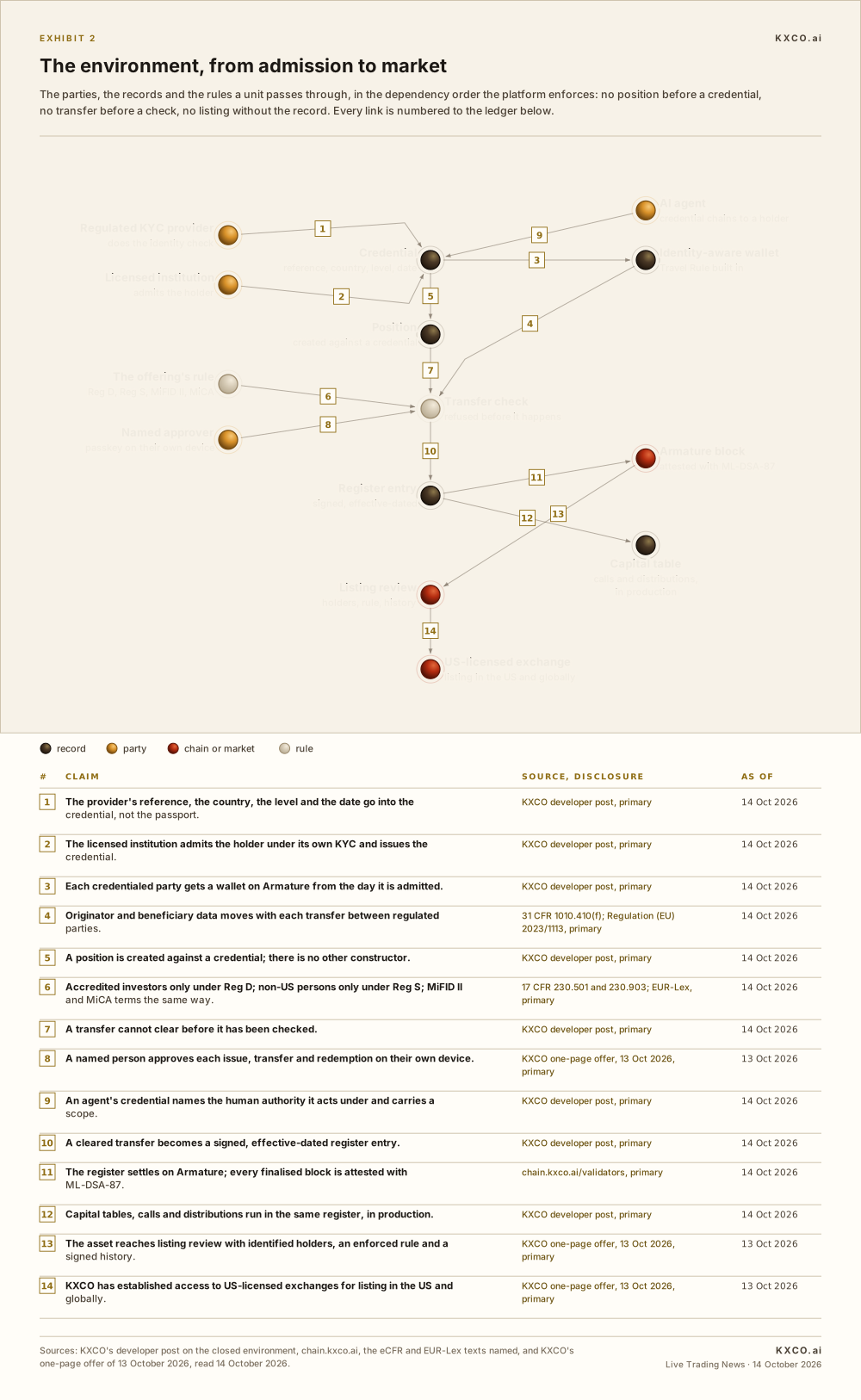
Exhibit 2. The environment, from admission to market. Each numbered link is a sourced claim, listed under the graph.
Larger transactions run through Guildhall, where the Member owns the room, guests are admitted on scoped tickets that expire, and a structured Round Table review reads the record before a named person approves the deal, per KXCO. Settlement returns to Sovereign or to the Member's own custodian, and KXCO holds no customer assets at any point, per KXCO.
Compliance is the key to a market
Most tokenised assets never reach a market, and an asset with no exit raises less money, more slowly. The reason is not technical. A listing review asks who the holders are, what rule governed each transfer, whether Travel Rule data travelled with it, and whether the ownership history is signed. An asset issued on KXCO arrives at that review with every one of those answers already in the register.
That is why compliance is the key to the market and not a cost of it. The approvals are being granted to the assets that can answer. Aviva Investors launched a tokenised share class of its US Dollar Liquidity Fund on 29 July 2026 with the Central Bank of Ireland's approval, per Aviva Investors. Schroders secured the same regulator's approval for its first tokenised share class, per Markets Media. ESMA has made tokenisation a supervisory priority across the Union from 2027, per ESMA. The direction is set, and it runs toward identified holders and enforced rules.
KXCO has established access to US-licensed exchanges for listing in the United States and globally, which is where Wall Street's own tokenised stock and fund units will trade under the SEC's exemption. An asset issued on Armature carries its holders identified, its rule enforced, Travel Rule data on each transfer and a signed ownership history, which is what a listing review asks for. An asset that can be sold after issue is easier to fund before it.
The next facts to watch are the first venues approved under the SEC's Innovation Exemption, ESMA's first supervisory findings on tokenisation in 2027, and the EU's 31 December 2026 milestone for post-quantum transition plans, which every tokenised asset outstanding on that date will be measured against.
KXCO is a software company. The licensed institution holds the assets and operates the regulated service. KXCO holds no financial licences, takes no custody of customer assets, and is not a broker or placement agent. Group counsel is Knightsbridge Law.
Sources: ESMA, the Central Bank of Ireland, the SEC, NIST, EUR-Lex and the European Commission as linked; chain.kxco.ai and the KXCO developer posts and product pages as linked, all read on 14 October 2026.
Shayne Heffernan, Ph.D., is the founder of Live Trading News, the KnightsBridge Group, Knightsbridge Law and the KXCO.ai ecosystem spanning post-quantum cryptography, identity, attestation and enterprise ontology.
This commentary is for informational purposes and does not constitute investment advice.

KXCO's New Names, Explained
Sentinel became Portcullis, Treasury became Sovereign and Meridian became Guildhall when KXCO brought its products into one family of seven, the House, on 9 October 2026. This guide explains what each name means and where it comes from, maps every former name to the product or module it became, shows how the seven connect, and lists what did not change: the addresses redirect, the packages and the chain keep their names.
Tokenisation and RWA With KXCO: ML-DSA-87 on Chain, Verifiable by Anyone
Armature, KXCO's chain, has verified ML-DSA-87, the highest security category in NIST FIPS 204, natively on chain since 6 October 2026, and KXCO's platform signing keys moved to it on 6 and 7 October. Regulators now name tokenisation a supervisory priority, and DORA already requires cryptography that can change with cryptanalysis. Six tests an institution should run before it trusts a tokenisation platform, and where to check KXCO's answer to each.
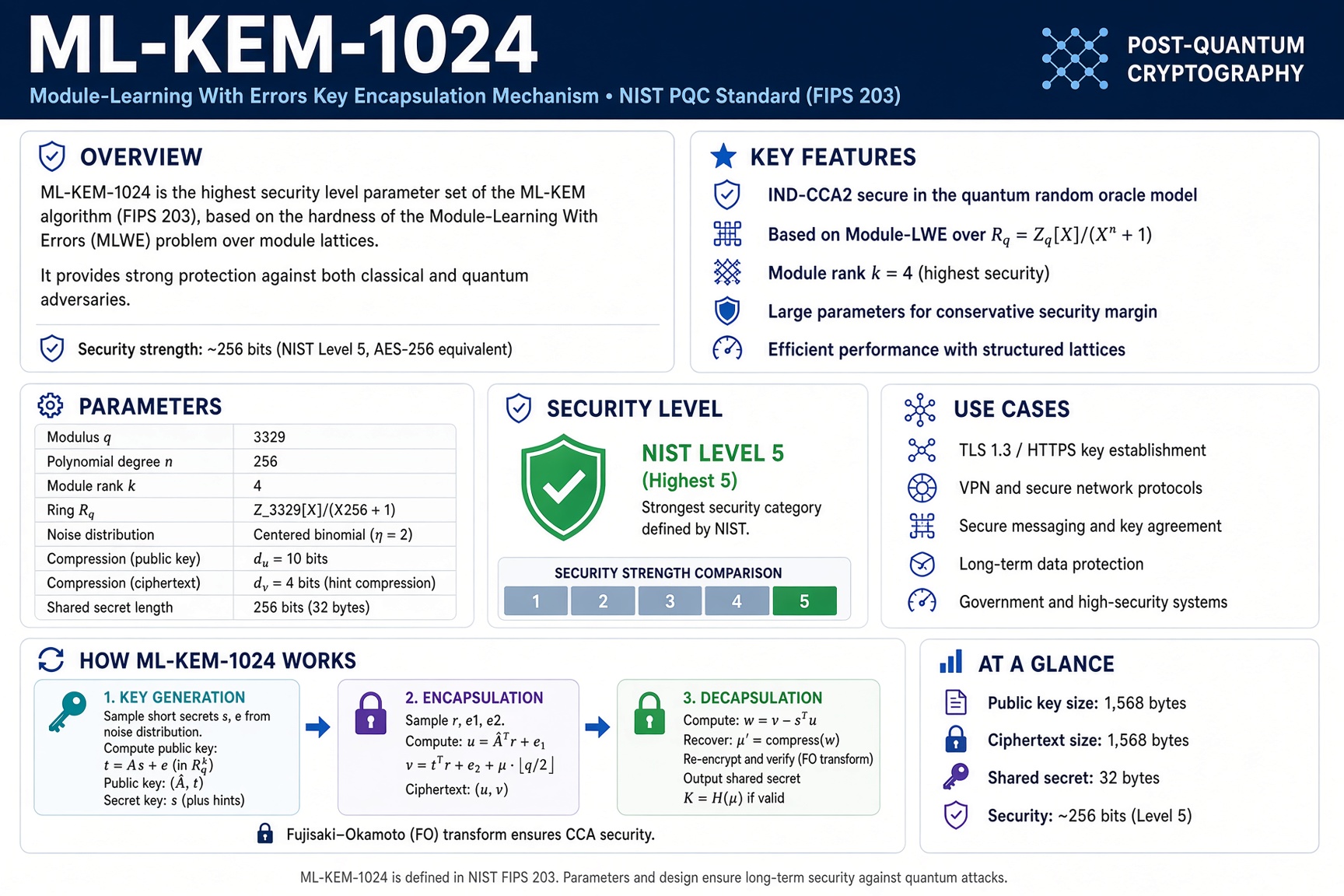
KXCO Makes ML-KEM-1024 Its Default, Completing the CNSA 2.0 Algorithm Pair
KXCO has made ML-KEM-1024 the default for new keys and new encryption in its post-quantum packages and its pqc.kxco.ai file vault. With its ML-DSA-87 signing keys, that is the pair of parameter sets NSA names in CNSA 2.0, which from 1 January 2027 governs new acquisitions for US national security systems. Every release was tested against the earlier releases from npm: data and keys made with ML-KEM-768 keep working.
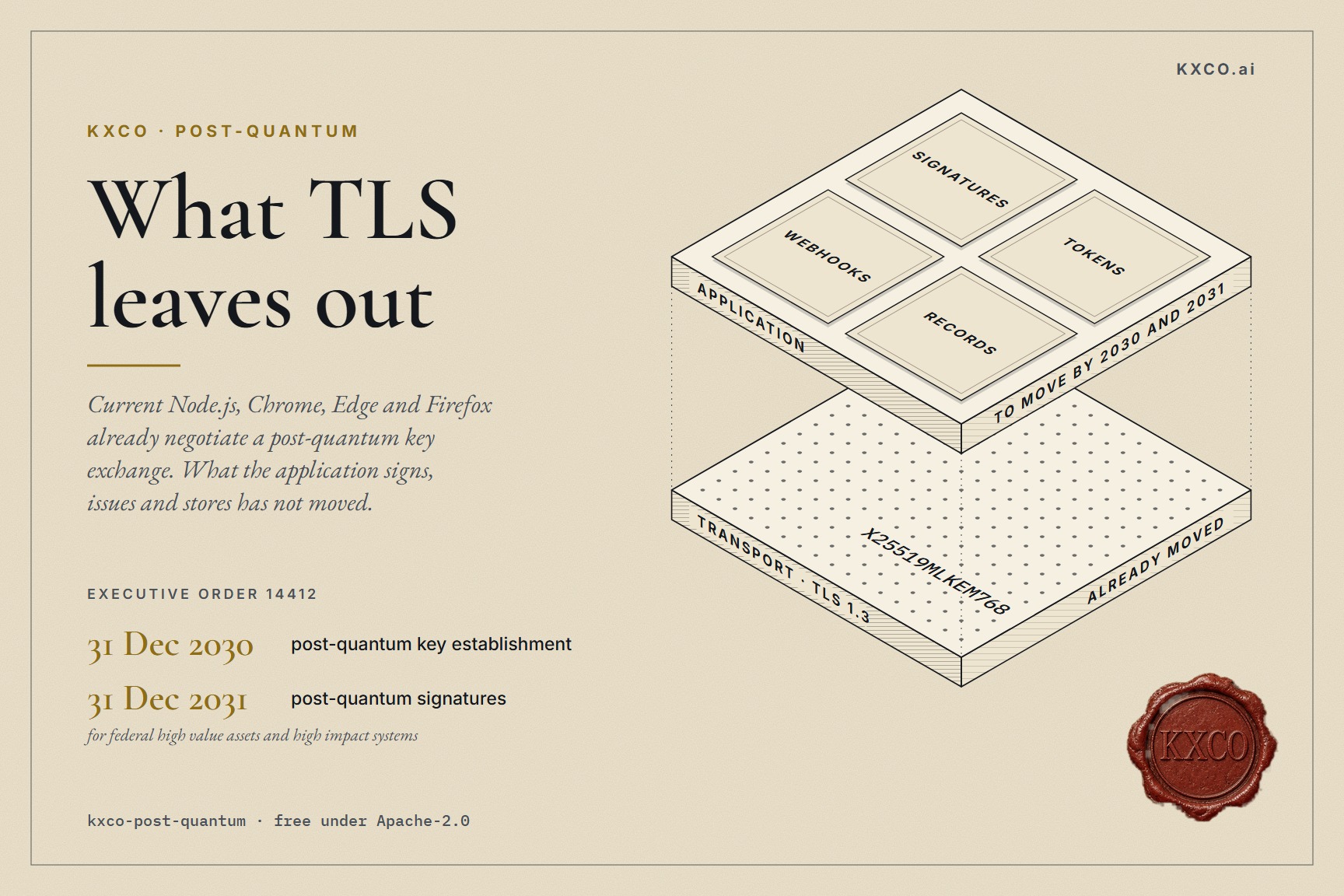
KXCO's Free Post-Quantum Library Covers What TLS Leaves Out
TLS already moved: current Node.js releases and the major browsers negotiate a hybrid post-quantum key exchange. What an application signs, issues and stores has not. Executive Order 14412 sets 31 December 2030 for post-quantum key establishment and 31 December 2031 for signatures in federal high value systems. kxco-post-quantum is KXCO's free Apache-2.0 library for that layer, tested against NIST's vectors. KXCO sells only the operated part: a live answer on whether a key is still trusted.
Every story, signed and delivered.
Subscribe to the kxco channel and get the headline, the AI-written key takeaways, and the chain-anchor link the moment we publish. Audio versions and per-ticker subscriptions arrive in the next iteration.