
The Heirloom Foods
Varieties that date back centuries: plants, wheat, sourdough, and the oldest surviving breeds of cattle, sheep, pigs, chickens and turkeys
Part of theLife Center
A living pantry older than nations
Heirloom foods are not a fashion. They are the working memory of agriculture: open-pollinated plants and landrace animals that families, villages and seed savers kept because they tasted better, survived drought or frost, or simply refused to disappear. Some are fifty years old. Many are two hundred. A few, einkorn wheat, Soay sheep, Meishan pigs, purple carrots painted in Egyptian tombs, sit on a timeline measured in millennia.
This article maps that pantry. It covers heirloom vegetables and fruits that still grow true from saved seed, the ancient and heritage wheats that built the first cities, the sourdough cultures that leavened bread long before commercial yeast, and the oldest surviving breeds of cattle, sheep, pigs, chickens and turkeys. For each group it notes origin, age, and what is actually known, and not known, about health.
Two definitions keep the subject honest. Heirloom plants are open-pollinated cultivars maintained by seed-saving, typically for fifty years or more and often much longer. Heritage animals are historic breeds that can reproduce naturally, retain the body type and purpose of their era, and have not been redesigned for industrial throughput. Formal breed registries are a nineteenth-century invention. The animals and plants themselves are older than the paperwork.
Industrial breeding after 1950 selected for yield, shelf life, uniform ripening and rapid growth. Those goals were rational for a global supermarket. They also narrowed flavor, sometimes diluted mineral density, and collapsed genetic diversity. The Food and Agriculture Organization has estimated that the twentieth century saw the loss of a large share of crop varieties once in common use. Livestock followed the same curve: a handful of high-output lines now dominate meat, milk and eggs. Heirlooms are the remainder, and the insurance policy.
Wheat: the founder grain
Wheat is the crop that turned foragers into farmers in Southwest Asia. The earliest domesticates, einkorn and emmer, belong to the classic "founder crops" of the Pre-Pottery Neolithic, domesticated between roughly 10,500 and 7,500 years ago alongside barley, lentil, pea, chickpea, bitter vetch and flax. Bread wheat (*Triticum aestivum*), the hexaploid grain that feeds most of the world today, arose later when cultivated emmer hybridized with a wild goatgrass. That event, around 8,000 to 9,000 years ago in the region of southeast Anatolia, created the staff of life for Europe, the Near East and eventually the plains of North America.
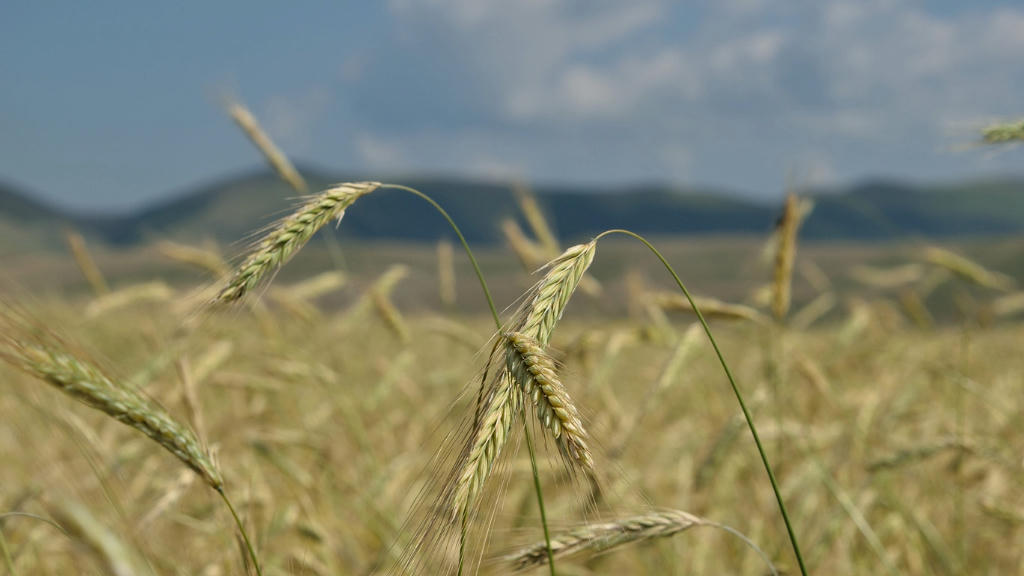
Emmer wheat in the field. Emmer is a hulled tetraploid founder crop of the Fertile Crescent.
Ancient wheats still in the field
Einkorn (*Triticum monococcum*) is diploid, two sets of chromosomes, the simplest wheat genome. It was domesticated from wild einkorn in the northern Fertile Crescent. The grain stays enclosed in a tough hull that must be dehulled after harvest. Yields are modest. Flavor is nutty and pronounced. Nutritionally, einkorn is repeatedly reported to carry higher levels of lutein and other carotenoids than modern bread wheat, along with notable tocols (vitamin E compounds) and phenolic antioxidants. It contains gluten, but the gluten matrix differs from modern hexaploid wheat, and some people who feel unwell on industrial bread report better tolerance. That is not a license for anyone with celiac disease. Celiac disease is an autoimmune reaction to specific gluten peptides present in einkorn as well.
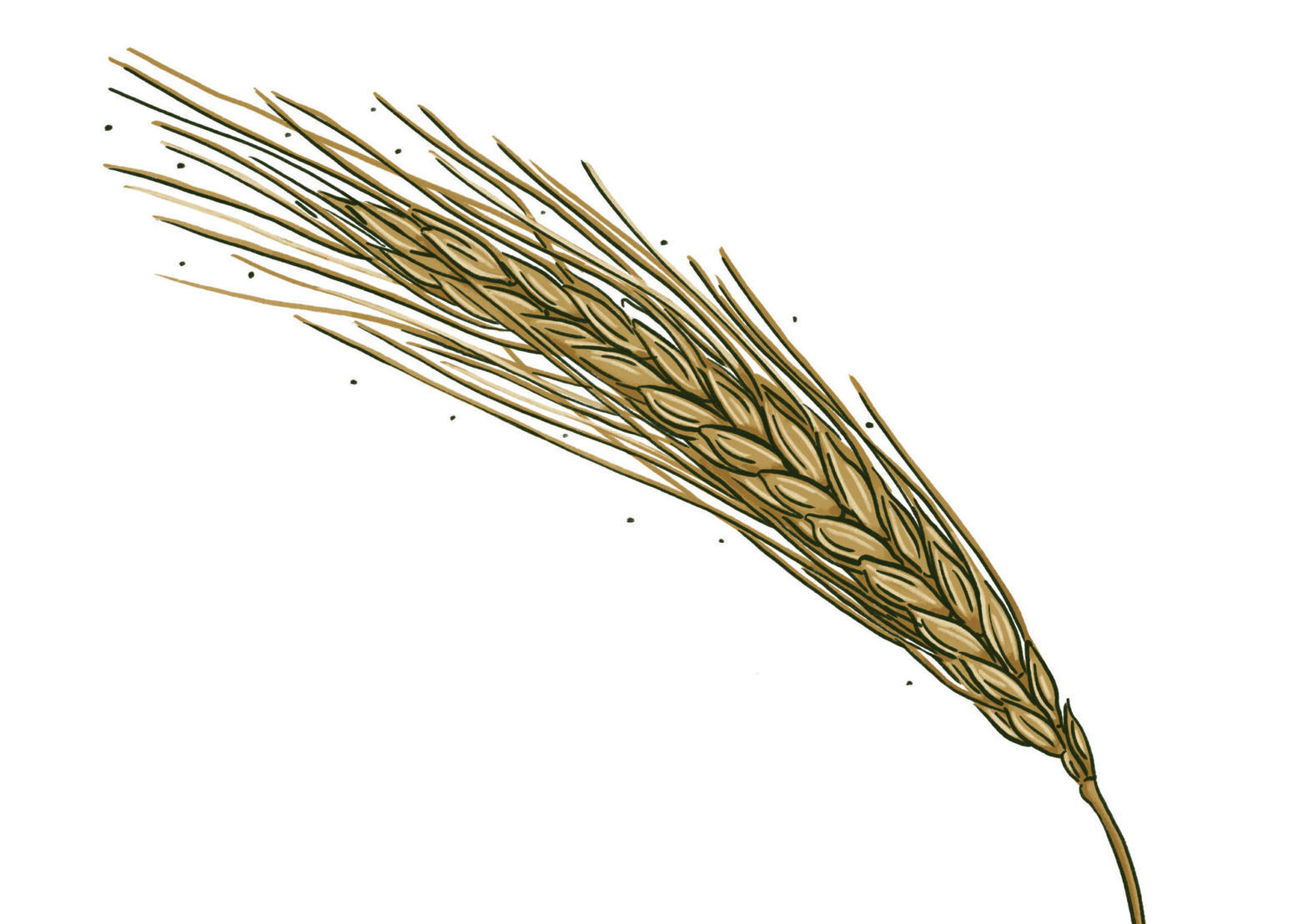
Einkorn ear. Diploid, hulled, and among the first cereals humans ever planted on purpose.
Emmer (*Triticum turgidum* subsp. *dicoccum*), also called farro in much of Italy, is tetraploid and hulled. It was a staple of pharaonic Egypt and of early Europe. Emmer tends to be higher in certain minerals and phenolics than many modern bread wheats, with a firm chew that suits soups, salads and rustic breads. Spelt (*Triticum spelta*) is a hulled hexaploid that persisted as a landrace across parts of Germany, Switzerland and Central Europe when naked bread wheat took over the lowlands. Khorasan, often sold under the trademark Kamut, is a large-kernel tetraploid related to durum. Clinical work has associated Khorasan-based diets, in some trials, with improvements in inflammatory markers and metabolic measures compared with modern wheat. Those results are promising but not universal.
Heritage and landrace bread wheats
"Ancient grain" and "heirloom wheat" are not the same. Ancient grains, einkorn, emmer, spelt and Khorasan, are species or subspecies that changed little for thousands of years. Heritage or heirloom wheats are usually naked *Triticum aestivum* landraces that farmers selected in the eighteenth and nineteenth centuries, before dwarf Green Revolution varieties and short-stature, high-input breeding remade the crop.
Turkey Red is the American story in a seed. Mennonite families brought hard red winter wheat from Crimea to Kansas in the 1870s. It founded the Great Plains bread-wheat industry. Most modern hard red winters descend from it. The original landrace still exists in the hands of seed savers and a few mills. Red Fife, selected in Ontario in the 1840s from a Ukrainian or Galician parent, became Canada's defining bread wheat of the nineteenth century and the parent of Marquis. Other named heirlooms show the same pattern of regional adaptation, taller straw, deeper flavor and lower yield: White Sonora in the Southwest, Rouge de Bordeaux in France, and various Italian *grani antichi* such as Senatore Cappelli, a 1915 selection from North African durum now treated as heritage.
Modern breeding increased harvest index and gluten strength for high-speed bakeries. It also narrowed the genetic base. Comparisons are messy because growing location, milling extraction and baking method matter as much as variety. Still, several reviews find ancient and heritage wheats often higher in carotenoids, some phenolics and certain micronutrients, with a different starch and gluten architecture. The dilution effect described by Donald Davis and colleagues, higher yield associated with lower mineral density across many mid-century crops, applies to wheat as well as to vegetables.
Wheat | Type / genome | Approx. origin | Notes |
|---|---|---|---|
Einkorn | Diploid hulled | Fertile Crescent, 10,000+ yrs | High lutein and tocols, nutty, low yield |
Emmer (farro) | Tetraploid hulled | Fertile Crescent founder crop | Egyptian and early European staple |
Khorasan | Tetraploid naked | Near East / Central Asia | Large kernel, some metabolic trial data |
Spelt | Hexaploid hulled | Bronze Age Europe / Near East | Central European landrace bread grain |
Bread wheat | Hexaploid naked | 8,000 to 9,000 yrs, Anatolia | Global staple, modern lines post-1950 |
Turkey Red | Heritage hard red winter | Crimea to Kansas, 1870s | Ancestor of U.S. hard red winters |
Red Fife | Heritage hard red spring | Canada, 1840s | Parent of Marquis, flavorful milling wheat |
Sourdough: humanity's oldest starter
Before packaged yeast, bread rose because flour and water were left alone. Wild yeasts and lactic acid bacteria colonize that paste. The baker keeps a piece of yesterday's dough, the starter, levain, mother, or *chef*, and folds it into today's. That practice is sourdough. It is not a San Francisco invention. It is the default leaven of agrarian civilization.
Archaeology will never hand us the first bowl. Fermentation leaves faint traces. The oldest physical hints of leavened bread reach into the fourth millennium BCE in Alpine Europe, and one oft-cited loaf fragment from Switzerland is dated around 3700 BCE. Egypt is where the method becomes a system. By about 3000 BCE, bakers along the Nile were producing leavened bread at a scale that fed pyramid work gangs. Tomb paintings show dough, conical clay baking pots called *bedja*, and the pairing of bread with beer, two products of the same microbial household. Egyptologist Delwen Samuel and others have argued that Egyptian bakers already practiced back-slopping: saving fermented dough for the next batch. In Egyptian Arabic the word for bread, *aish*, is also the word for life.
In 2019 the physicist and baker Seamus Blackley, working with Egyptologists and museum collections, revived yeast recovered from 4,000-year-old Egyptian baking vessels and baked loaves with period-appropriate grain. The experiment does not prove a continuous 4,000-year culture in a jar. It does prove that the organisms of ancient dough can still wake up, and that the flavor of that bread is not a modern marketing line.
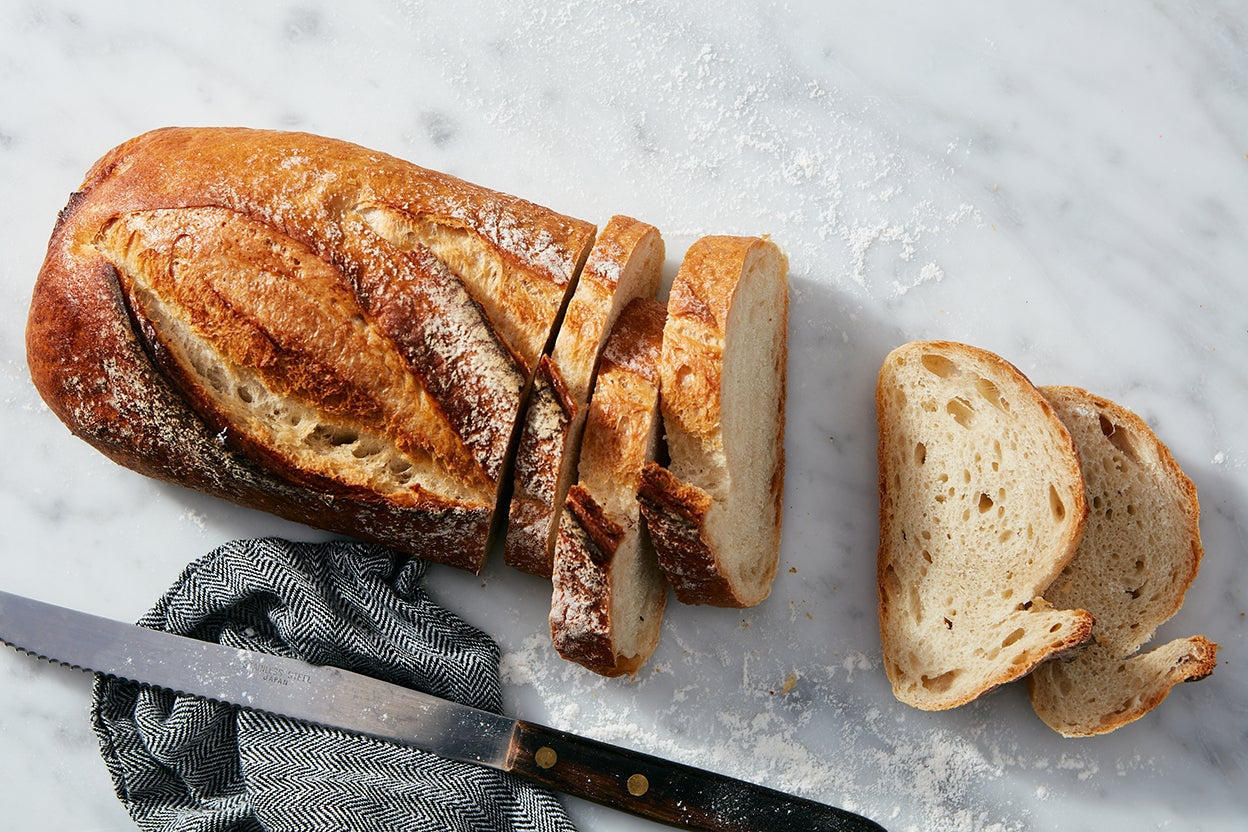
A modern rustic sourdough crumb. The holes, acidity and keeping quality come from wild yeast plus lactic acid bacteria.
From Rome to the gold fields
Pliny the Elder, writing in the first century, already describes the use of old dough and of foam from wine-making as leaven. Greece and Rome spread wheat bread across the Mediterranean. Medieval Europe kept the starter in every bakehouse. Commercial compressed yeast only became practical in the nineteenth century, after the work of scientists such as Charles and Max Fleischmann and the rise of distillery yeast. Once bakers could buy a reliable packet, the slow sour ferment looked inefficient. It survived in pockets: the rye countries of Northern and Eastern Europe, village bakeries, and famously San Francisco.
Gold Rush bakers in mid-nineteenth-century California maintained starters that produced a sharp, stable sour. In 1970 researchers isolated the dominant lactic acid bacterium of those doughs and named it *Lactobacillus sanfranciscensis*, now *Fructilactobacillus sanfranciscensis*. The species is not unique to California. It is the signature organism of traditional Type I sourdoughs worldwide. It lives in a partnership with yeasts such as *Kazachstania humilis*: the bacterium eats maltose, the yeast eats other sugars, and neither crowds the other out. The acids they produce, lactic and acetic, flavor the loaf, inhibit rope-forming spoilage bacteria, and begin to break down flour components before the oven.
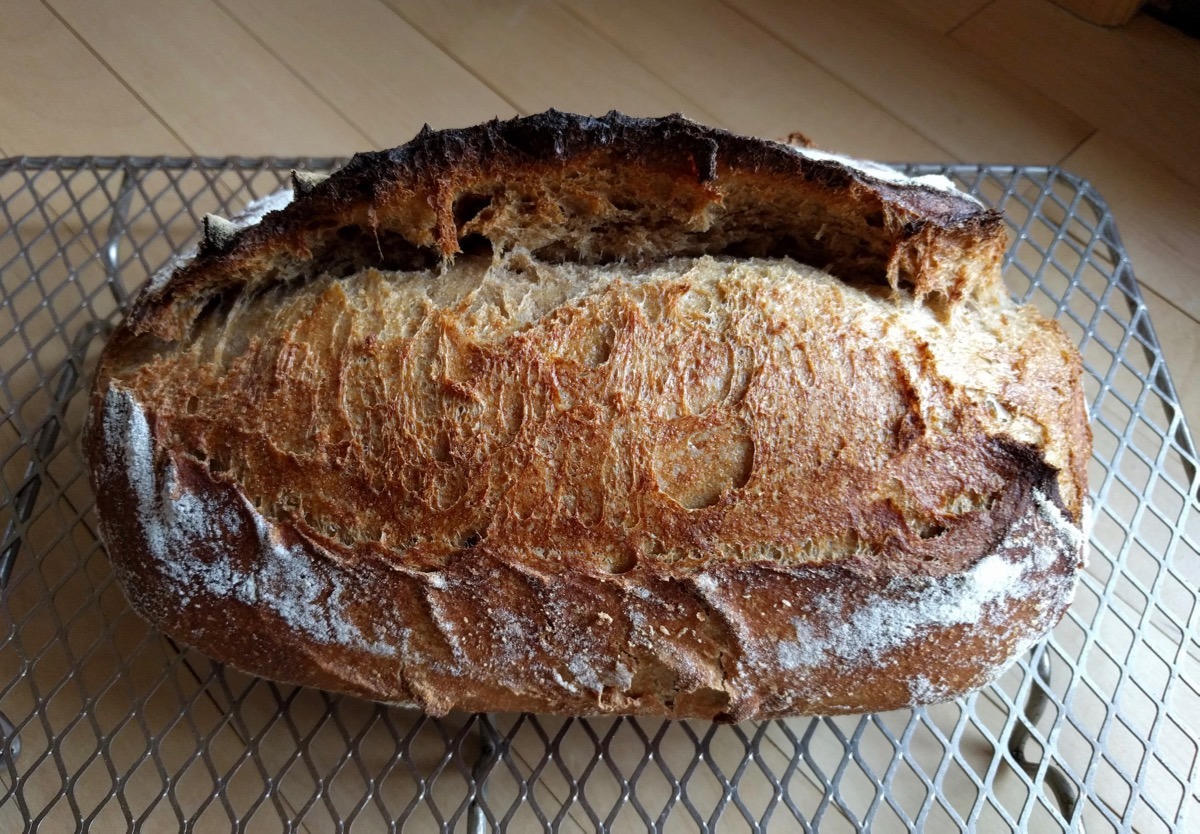
Whole-grain country sourdough. Heritage wheat and a long ferment are a natural pair.
Why sourdough and heirloom wheat belong together
A long, cool ferment does work that a two-hour commercial-yeast dough cannot. Phytates, which bind minerals in whole grain, are partly degraded. Some FODMAPs are reduced. Proteins, including portions of gluten, are hydrolyzed. The glycemic response of sourdough bread is often lower than that of a quickly yeasted loaf of the same flour, though the size of the effect depends on flour, hydration, time and the rest of the meal. Acidity also improves keeping quality without additives.
Heirloom and ancient wheats are frequently weaker or differently structured in gluten than modern high-protein bakery flours. They reward the sourdough method, because time builds the strength and flavor that brute gluten strength would have supplied. Bakers who mill Turkey Red, Red Fife, einkorn or emmer fresh and ferment them 12 to 24 hours or longer routinely report a loaf that industrial white pan bread cannot imitate. That is culinary fact. The health claims need more caution. Sourdough does not make wheat safe for celiac disease. It may make whole-grain bread more comfortable for people with mild wheat sensitivity, and it is a better vehicle for the carotenoids and phenolics that ancient grains actually contain.
A starter is also a culture in the human sense. Families pass jars down decades. Bakeries keep the same mother for a century. In that way sourdough is the microbial analogue of an heirloom seed: a living lineage that only continues if someone feeds it.
Heirloom plants: vegetables that refused to modernize
Most of the vegetables in a nineteenth-century seed catalogue would look strange in a supermarket. Fruits were softer, colors ran from near-black to striped white, shapes were irregular, and harvest windows were short. Those traits were liabilities for long-haul shipping. They were assets for flavor. Gardeners and small farmers saved the seed of what they liked. The result is the heirloom list.
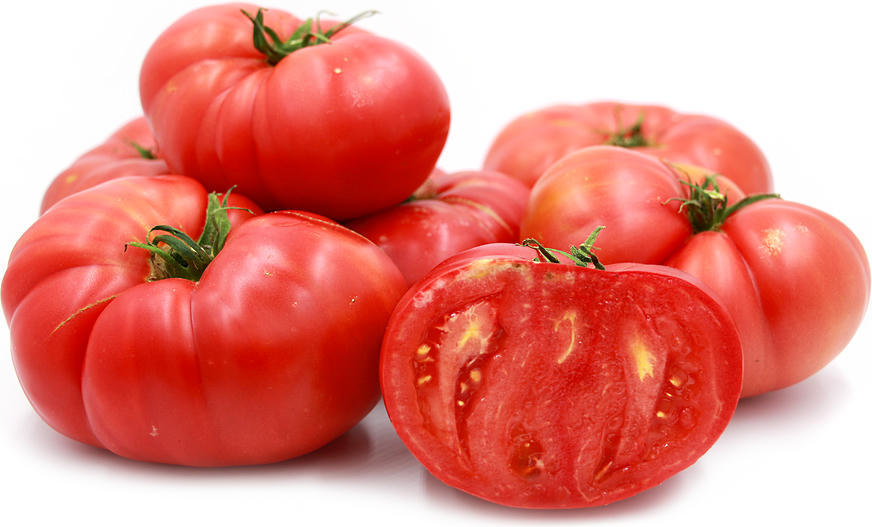
Brandywine tomato, the Amish heirloom of 1885 from Chester County, Pennsylvania, still the flavor standard for many growers.
Roots that predate the grocery store
Afghan or purple carrot. Cave paintings and early texts point to purple carrots in Afghanistan and Egypt around 2000 BCE. Orange carrots are the latecomers, popularized in the Netherlands. Purple types carry anthocyanins on top of the usual carotenoids.
Black Spanish radish. Documented from the sixteenth century and likely older, with long Black Spanish appearing in lists by 1717. Dense, pungent, winter-keeping.
Chioggia beet (Italy) and Crapaudine beet (France, seventeenth century or earlier) keep the candy-stripe and bark-like skins that modern table beets smoothed away. Yellow table beets were already known by 1583.
Skirret (*Sium sisarum*). A sweet clustered root that Romans prized. Emperor Tiberius is said to have demanded it as tribute. It was a European staple before the potato.
Good King Henry (*Blitum bonus-henricus*). A perennial spinach relative gathered since the Neolithic and grown in cottage gardens for centuries as "poor man's asparagus."
Brassicas, greens, legumes
Danish Ballhead cabbage. Fifteenth-century Denmark, dense heads that store.
Florence fennel. In Italian gardens by the 1500s.
Deer Tongue lettuce. Pointed leaves, documented from the 1740s.
Scarlet Runner bean. South American origin, in European gardens from the 1600s, eaten as snaps or dried and grown as much for the scarlet flowers as for the pot.
Kentucky Wonder pole bean. 1850s Kentucky, still one of the most planted American heirlooms.
Family butter beans such as Red Calico, a Tennessee line from 1794, and Jackson Wonder from 1880s Georgia.
Windsor broad beans and other favas with pedigrees into the eighteenth century.
Mummy's pea of Durweston, Dorset. A local line wrapped in a story of seed from an Egyptian tomb. Whatever the legend, the variety itself is an old English garden pea.
Fruiting vegetables and squash
The tomato did not become an American household crop until the nineteenth century. Once it did, named heirlooms multiplied. Brandywine, the 1885 Amish potato-leaf variety with one-pound pink fruit, is the celebrity. Cherokee Purple, Paul Robeson, Mortgage Lifter and dozens of regional beefsteaks followed. Peppers such as Bull Nose (1759) and Italian Corno di Toro keep pre-industrial shapes. Squash and pumpkin heirlooms reach further back. Connecticut Field pumpkin is a pre-1700 Native cultivar that early colonists adopted, and Long Island Cheese squash was already common at the time of the American Revolution.
Japan's Kyoyasai, the traditional vegetables of Kyoto, form a parallel archive. Some types descend from introductions between the fifth and twelfth centuries. Kamo eggplant is an Edo-period round purple fruit still grown for the city's kitchens. In the Near East, researchers have even revived a fuzzy, oblong melon matching biblical and Talmudic descriptions of *qishuim*, a fruit that had dropped out of Jewish cooking for centuries.
Charlemagne's early-ninth-century *Capitulare de villis* already lists cucumber, chickpeas, celery, carrot, cabbage, leek, pea, lettuce, garlic, onion and the kitchen herbs. The medieval European garden was not primitive. It was diverse. What vanished later was not gardening skill but the market incentive to keep odd shapes and short shelf lives.
Plant | Approx. age | Origin / note |
|---|---|---|
Einkorn and emmer wheat | 10,000+ years | Fertile Crescent founder crops |
Purple / Afghan carrot | About 4,000 years | Afghanistan, Egyptian depictions |
Cabbage (headed types) | Millennia, Ballhead 1400s | From wild Mediterranean cliff kale |
Black Spanish radish | 1500s or earlier | Winter keeper of Europe |
Florence fennel | 1500s | Italy |
Scarlet Runner bean | 1600s in Europe | Andean origin |
Connecticut Field pumpkin | Pre-1700 | Native American cultivar |
Deer Tongue lettuce | 1740s | Heat-tolerant looseleaf |
Bull Nose pepper | 1759 | Early American sweet pepper |
Brandywine tomato | 1885 | Amish, Pennsylvania |
Kentucky Wonder bean | 1850s | Kentucky pole snap |
Heritage animals: breeds that predate the feedlot
Domestication and breed are different clocks. Sheep, goats, pigs and taurine cattle were brought under human management in the Fertile Crescent about 10,000 to 11,000 years ago. Zebu cattle followed in the Indus Valley. Chickens were domesticated from red junglefowl in Southeast Asia on a later timetable, and current archaeology puts clear domestic birds around 3,500 years ago. Turkeys were domesticated in Mesoamerica more than 2,000 years ago, the only major vertebrate domesticate of pre-Columbian North America.
A breed with a herdbook is much younger. The first cattle pedigree book, Coates's Shorthorn herdbook, appeared in 1822. Everything before that is a landrace: a population shaped by climate, forage, work and the taste of a region. The oldest animals still eating grass on farms today are those landraces and the nineteenth-century breeds built from them.
Cattle, 10,000 years of aurochs blood
Taurine cattle (*Bos taurus*) descend from the Eurasian aurochs, domesticated in the northern Fertile Crescent around 10,250 to 10,800 years ago. Zebu (*Bos indicus*) descend from the Indian aurochs about 8,000 years ago. African humpless cattle may represent a third early stream. The aurochs itself died out in 1627 in Poland. Its genes persist, in diluted form, in every cow.
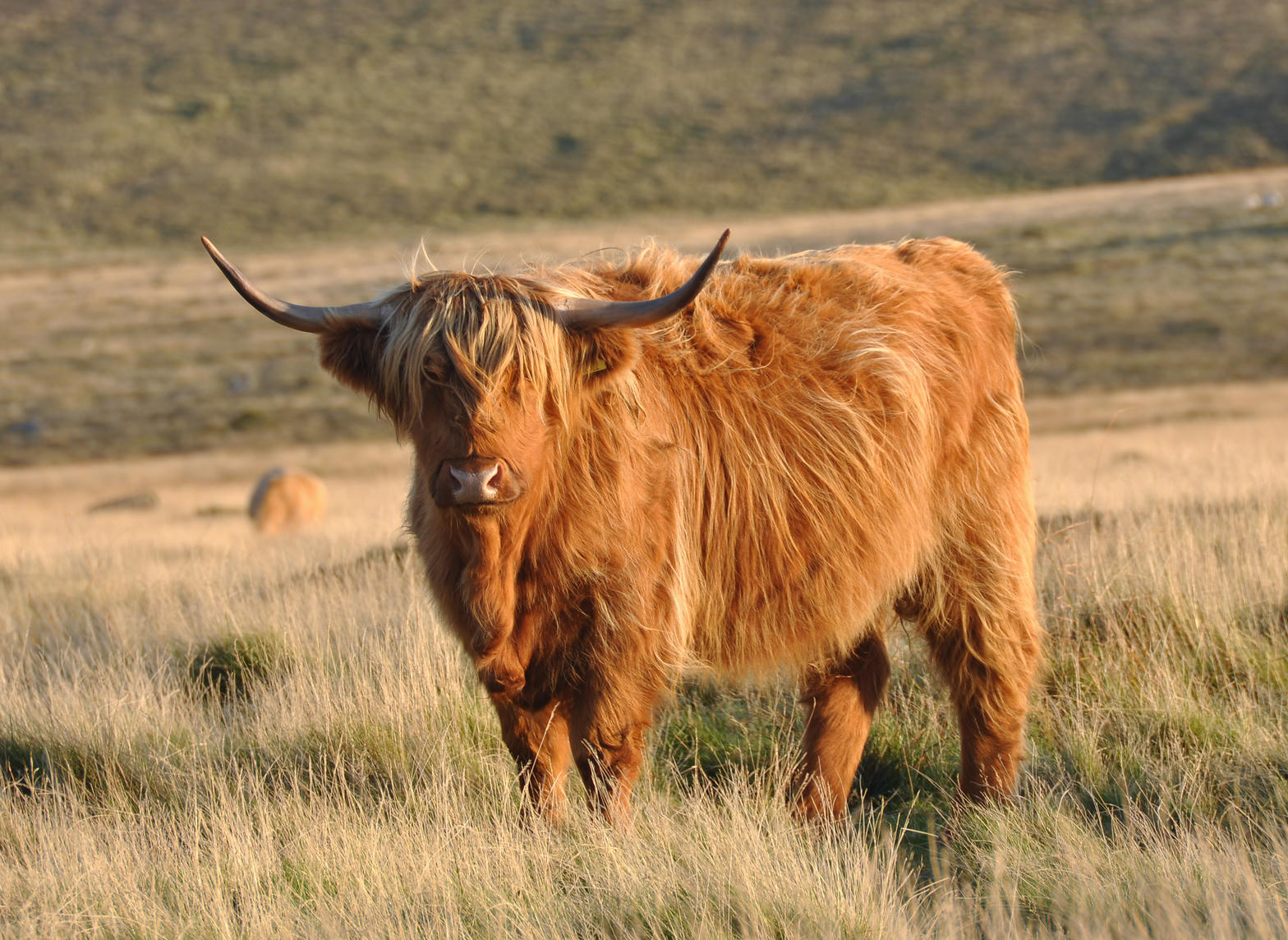
Highland cattle. A Scottish mountain landrace: long hair, long horns, and the ability to winter on rough forage.
Surviving types that still look like history: White Park of Britain, ancient white cattle with colored points, used today for beef and conservation grazing; Highland of Scotland; Devon and Galloway; Ireland's small Dexter and Kerry; Canada's Canadienne; West Africa's trypanotolerant N'Dama; East Africa's long-horned Ankole-Watusi and other Sanga cattle. Shorthorn is the oldest pedigree beef breed in the modern sense. Not the oldest cattle, but the first whose ancestry was written down bull by bull.
Sheep, the first pastoral contract
Sheep were domesticated from Asiatic mouflon about 9,750 to 11,000 years ago. By 8,000 years ago herders were already selecting coat color. The most primitive domestic sheep still alive is the Soay of St Kilda: small, brown or tan, shedding rather than needing a full shear, genetically close to early Neolithic stock. Other historic types include Navajo-Churro, from Spanish Churra sheep that reached the Southwest in the sixteenth century, plus Jacob, Gulf Coast Native, Shetland, Wiltshire Horn and the British hill breeds that never went to the lowland fat-lamb system.
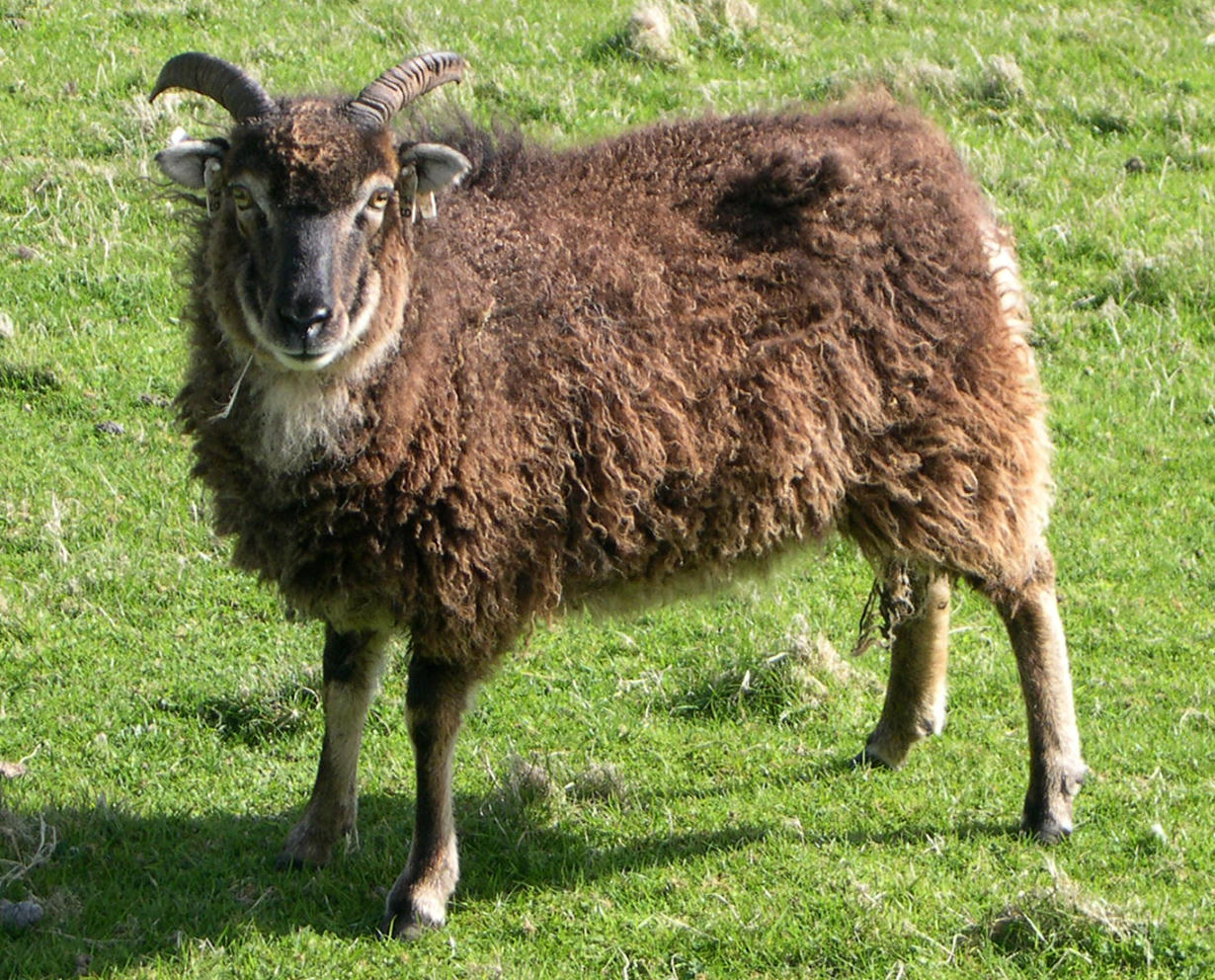
Soay sheep. A feral, primitive breed on St Kilda and the nearest living picture of early domestic sheep.
Pigs, two domestication hearths
Pigs were domesticated from wild boar at least twice: in Southwest Asia around 9,000 to 10,000 years ago and independently in China. Meishan, a wrinkled, lop-eared Taihu pig of the lower Yangtze, is among the oldest named Chinese types still kept, with a documented history stretching back millennia and a reputation for large litters and rich meat. In Europe and America the historic names are younger but the types are old: Gloucestershire Old Spots, the orchard pig of western England and one of the oldest pedigree spotted breeds, Large Black, and New World relics of sixteenth-century Spanish hogs such as Choctaw, Ossabaw Island and Mulefoot.
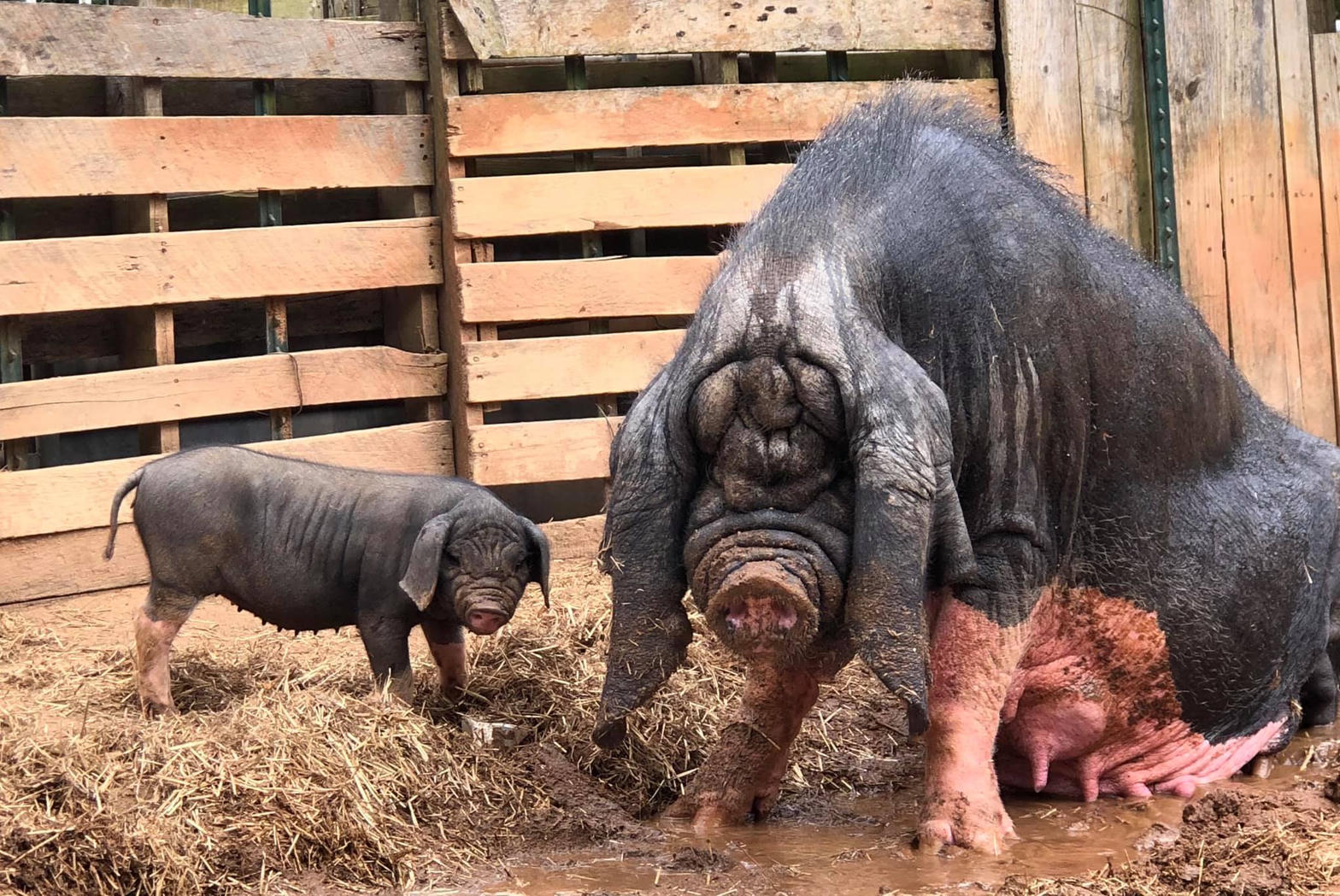
Meishan sow and piglet. A Chinese Taihu breed counted among the oldest surviving pig types.
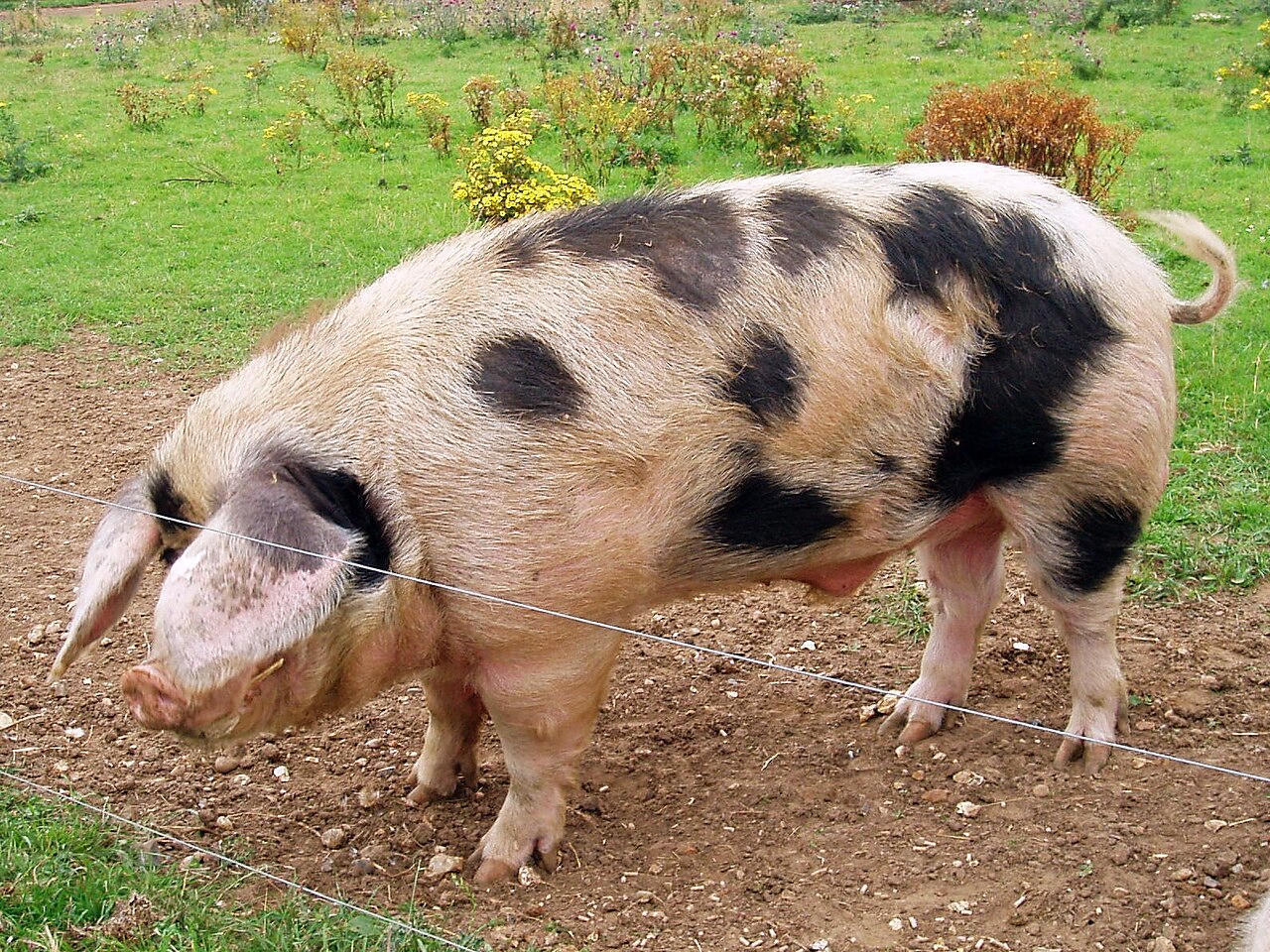
A spotted British-type pig in the Gloucestershire Old Spots tradition, orchard foragers kept for flavor, not speed.
Chickens, from junglefowl to the farmyard
The red junglefowl of Southeast Asia is the principal wild ancestor. Claims of 8,000 to 10,000-year-old Chinese chickens have been revised. The best current reading is that close human management of junglefowl took hold as dry-rice farming spread, with the oldest secure domestic bones at Ban Non Wat in Thailand around 1650 to 1250 BCE, and chickens reaching the Mediterranean only in the first millennium BCE.
What settlers called "dunghill fowl" were mixed landraces, not brands. Named heritage breeds crystallized later: Java, among the oldest American breeds and a foundation for others, Dominique, the Pilgrim-era barred farm chicken of New England, Cochin from China, Plymouth Rock (1874) and Rhode Island Red, recognized in 1904 but built from older stock. Dual-purpose heritage birds still lay for years and carry enough meat to roast. Industrial layers and broilers do one job at extreme speed and are poor at the other.
Turkeys, the American domesticate
Turkeys were domesticated independently at least twice. In Mesoamerica, people managed the South Mexican wild turkey (*Meleagris gallopavo gallopavo*) by the Preclassic. Bones and isotope evidence of corn-fed birds appear by roughly 800 to 100 BCE, with established flocks by about AD 180. Maya elites were already using turkeys ceremonially more than 2,300 years ago. A second domestication, from Eastern and Rio Grande wild turkeys, took hold in the American Southwest as early as the Basketmaker II period, about 200 BCE to AD 500. That southwestern lineage did not survive into modern farm stocks.
Spanish ships carried Mexican domestic turkeys to Europe in the early 1500s. European flocks produced Norfolk Black, bronze and white types. Colonists then brought those birds back across the Atlantic. By 1700 domestic turkeys were common in the mid-Atlantic and the Coastal South. The American Poultry Association later standardized Black, Bronze, Narragansett, White Holland, Slate, Bourbon Red, Beltsville Small White and Royal Palm. A heritage turkey, by the Livestock Conservancy definition, must mate naturally and grow at a historic rate. Industrial Broad-Breasted Whites often cannot breed without artificial insemination and reach slaughter weight so fast that legs and hearts struggle to keep up.
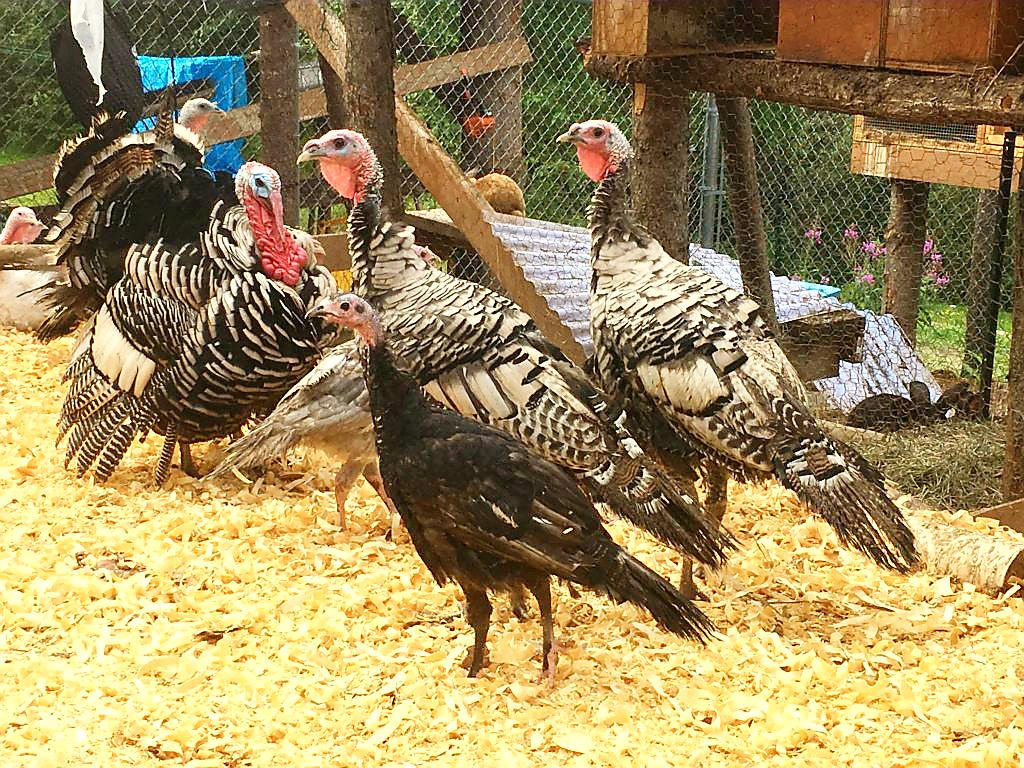
Heritage turkeys of mixed historic color. Birds that can still mate, forage and live like farm turkeys rather than factory broilers.
Animal | Domestication | Oldest surviving types |
|---|---|---|
Cattle | Taurine 10,300 to 10,800 yrs, zebu about 8,000 | White Park, Highland, N'Dama, Ankole-Watusi, Devon, Kerry |
Sheep | 9,750 to 11,000 yrs, SW Asia | Soay, Navajo-Churro, Jacob, Gulf Coast Native, Shetland |
Pigs | 9,000 to 10,000 yrs, SW Asia and China | Meishan, Gloucestershire Old Spots, Ossabaw, Choctaw |
Chickens | About 3,500 yrs, SE Asia | Java, Dominique, Cochin, later Plymouth Rock and R.I. Red |
Turkeys | Over 2,000 yrs, Mesoamerica plus a SW lineage | Bronze, Narragansett, Bourbon Red, Black, Slate |
Health benefits, what the evidence actually says
Heirloom is not a synonym for medicine. A purple carrot is still a carrot. A Soay lamb is still red meat. The honest case is narrower and stronger: older varieties often differ in phytochemicals and minerals, fermentation changes grain, pasture and slow growth change fat, flavor changes how much produce people actually eat, and diversity is a public-health asset when a single clone fails.
Vegetables and fruit
Mid-twentieth-century comparisons of crops grown in 1950 versus the same or equivalent crops in 1999 found declines in several minerals and vitamins. Davis called this the dilution effect: as breeders pushed yield, the plant packed more starch and water relative to micronutrients. The pattern is not universal and not every heirloom beats every hybrid. Color, however, is a reliable clue. Anthocyanin-rich purple carrots and red-leaf chicories, betalain-rich beets, and the chaotic carotenoid mix of heirloom tomatoes supply phytonutrients that a pale shipping tomato was never designed to carry. Flavor is the stealth public-health tool. People eat what tastes like food.
Wheat and sourdough
Ancient wheats, einkorn, emmer, spelt and Khorasan, commonly show higher carotenoids, especially lutein, and in several datasets higher phenolic acids and tocols than modern bread wheat. Some controlled diets using Khorasan have reported lower fasting glucose and insulin and improved inflammatory markers versus modern wheat. Animal work with einkorn and emmer has pointed in a similar metabolic direction. Gluten content is not magically low. In some ancient samples it is comparable or higher. What differs is the protein composition and, after a long sourdough ferment, the degree of hydrolysis.
Sourdough's documented effects are biochemical, not mystical. Lactic fermentation lowers pH, increases mineral bioavailability by acting on phytate, can reduce certain fermentable carbohydrates, and slows starch digestion enough to flatten glycemic curves in many studies. A whole-grain heirloom loaf, naturally leavened and baked dark, is a different food from a high-throughput white pan loaf. It is still wheat. Anyone with celiac disease needs certified gluten-free grain, not a romantic starter.
Meat, milk, eggs
Breed matters less than diet and time. A Highland steer finished on hill grass will have a different omega-3 to omega-6 ratio and more conjugated linoleic acid than a grain-lot animal of any breed. The same is true of lamb. Heritage pigs such as Old Spots and Meishan deposit fat differently, and the lard and intramuscular fat that industrial lean lines bred out are exactly what traditional cooks wanted. Heritage turkeys and dual-purpose chickens, grown to 24 to 28 weeks instead of six or seven, develop flavor and a fat cover that fast broilers never acquire. They also avoid some of the skeletal and cardiopulmonary failures built into extreme growth genetics.
None of this makes heritage meat a health food in the marketing sense. Red meat remains red meat. The advantage is qualitative: fewer animals pushed past their physiology, more omega-3 where grass is the ration, and a carcass that tastes good enough to eat in moderate portions instead of as cheap bulk.
What not to claim
Heirlooms will not detoxify anyone. They will not replace medicine. Some old varieties are more disease-prone in the garden than modern hybrids. Some heritage animals grow too slowly to be economical without a premium price. Nutrition data vary by soil, weather, milling extraction and cooking. The right claim is comparative and modest: older genetics plus traditional processing plus pasture often produce food that is more flavorful, sometimes more nutrient-dense in specific compounds, and always more interesting than the narrow industrial set.
Who keeps these foods alive
Seeds die if no one plants them. Breeds die if no one eats them. The practical infrastructure is a handful of organizations and thousands of stubborn gardeners and graziers. Seed Savers Exchange in Iowa, the Heritage Grain Conservancy, national genebanks, and regional groups such as the keepers of Kyoyasai in Kyoto hold plant diversity. The Livestock Conservancy in the United States, the Rare Breeds Survival Trust in Britain, and equivalent societies elsewhere keep the animal census. The FAO's DAD-IS database tracks thousands of livestock breeds. Hundreds of cattle, sheep, pig and chicken breeds are already extinct, and many more sit on critical or threatened lists.
Buying is conservation. A mill that pays a farmer for Turkey Red, a butcher who hangs a Devon carcass, a baker who runs a forty-year starter on freshly milled Red Fife, a gardener who grows Brandywine and saves the seed. Each of those acts keeps a lineage in circulation. The supermarket will not do this work. It is not designed to.
"Agriculture did not begin with the hybrid and the feedlot. It began with a handful of grains, a bowl of fermenting dough, and animals that could walk to water. Those things still exist. They only need to be planted, fed, and eaten."
A longer table
The heirloom pantry is not a museum. Einkorn still fills fields in Turkey and a growing number of organic acres in Europe and North America. Sourdough is again the default loaf in serious bakeries. Heritage turkeys sell out before Thanksgiving in every city that has a decent butcher. Purple carrots sit beside orange ones at farmers' markets. That is the point. Food that dates back centuries only earns another century if it stays on the plate.
The list in this article is a starting map, not a catalogue. Every climate has its own landraces: rice in East Asia, sorghum in the Sahel, maize and beans and squash in the Americas, millet across dry continents. The same logic applies. Keep the old genetics, ferment where fermentation helps, graze where grass grows, and measure health by what people actually swallow with pleasure, not by what a yield chart promises.
Shayne Heffernan, Ph.D., is the founder of Live Trading News, the KnightsBridge Group, Knightsbridge Law and the KXCO.ai ecosystem spanning post-quantum cryptography, identity, attestation and enterprise ontology.
This feature draws on archaeological and genetic literature on domestication, seed-saver and livestock-conservancy records, and published comparisons of ancient, heritage and modern crops. Dates for domestication are consensus ranges and continue to move as ancient DNA and excavation refine the clock. Further reading and keepers: Seed Savers Exchange, The Livestock Conservancy, Rare Breeds Survival Trust, FAO DAD-IS, the Heritage Grain Conservancy, the HEALTHGRAIN papers on cereal micronutrients, Davis on the dilution effect in modern crops, and Thornton and colleagues on turkey domestication.
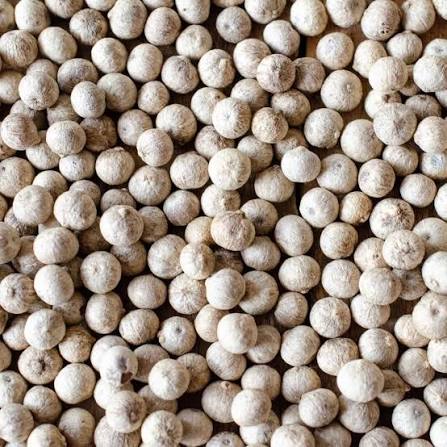
Kampot White Pepper: The Health Benefits
Kampot white pepper is the world's most expensive white pepper, and the health case behind it is better documented than most. A cited look at the piperine evidence on nutrient absorption, digestion, inflammation and metabolism, plus the protected origin economics that set the price.
Health: Paths to a Longer Life
Organic Food: Its Nutritional Value
Real Food: Regenerative Agriculture
Every story, signed and delivered.
Subscribe to the kxco channel and get the headline, the AI-written key takeaways, and the chain-anchor link the moment we publish. Audio versions and per-ticker subscriptions arrive in the next iteration.