
Sovereign Individual and Bitcoin
The book The Sovereign Individual by James Dale Davidson and William Rees-Mogg was published in 1997, and it predicted a number of trends that have come to pass, including the rise of the internet, the decline of the nation-state, and the increasing importance of individual sovereignty.
One of the key themes of the book is that the rise of the internet and other technological innovations is making it possible for individuals to become more self-sufficient and less reliant on governments and other institutions. The authors argue that this trend will lead to a decrease in the level of freedom that governments have over their citizens, and a rise in the level of taxation that governments need to impose in order to fund their operations.
There is some evidence to support the authors' claims. For example, the rise of the gig economy has led to an increase in the number of people who are self-employed and not subject to the same level of government oversight as traditional employees. Additionally, the rise of cryptocurrencies has made it possible for people to store and transfer their wealth without the need for a bank or other financial institution.
Overall, the book The Sovereign Individual is a thought-provoking work that raises important questions about the future of freedom and taxation in the digital age. While the authors' predictions may not all come to pass, the book provides a valuable framework for thinking about the challenges and opportunities that lie ahead.
Here are some specific examples of how the trends described in the book are playing out in the real world:
The rise of the gig economy has led to an increase in the number of people who are self-employed and not subject to the same level of government oversight as traditional employees.
The rise of cryptocurrencies has made it possible for people to store and transfer their wealth without the need for a bank or other financial institution.
Governments are still able to impose a significant amount of control over their citizens through things like taxes, regulations, and surveillance.
The internet has also made it possible for governments to exert more control over their citizens in some ways, such as through the use of social media and big data.
Bitcoin can be used to store wealth without having to rely on a bank or other financial institution. This can be especially beneficial for people who live in countries with unstable currencies or who do not have access to traditional banking services.
Bitcoin can be used to transfer wealth anywhere in the world without having to go through a traditional financial institution. This can be especially beneficial for people who work and travel internationally.
Bitcoin can be used to make payments to businesses and individuals who accept Bitcoin. This can give people more choices about where to spend their money and can help to reduce their reliance on traditional financial institutions.
It is important to note that the book The Sovereign Individual is not a call for anarchy or revolution. Rather, it is a call for individuals to be aware of the trends that are shaping the world around them and to take steps to protect their freedom and sovereignty.
AI is the Neat Handwriting of the Illiterate
A model in the hands of someone who has read the filing and walked the plant is a clerk. The same model, speaking for someone who has done neither, is a disguise. On AI slop, phantom citations and factslop, why finish stopped being evidence of work, and the containment layer KXCO built so a machine cannot speak as the institution until a source is attached.
Worthship: Do Not Conform to the Age
Worthship is the older English word for worship, and it means to ascribe worth. Bishop Robert Barron preached Romans 12 on 30 August. This essay follows the text into the prison letters, and puts two questions to a graph: do the four readings of that Sunday agree, and was Paul free or in chains when he wrote about despair?
The Truth in All Its Ugliness Must Survive
A majority vote does not determine the truth. Consensus is a mood, gossip is a sport, and a model will write the pretty version for free. Why the ugly number has to survive, why a record beats a dashboard, and what KXCO was built to keep standing when the room changes its mind.
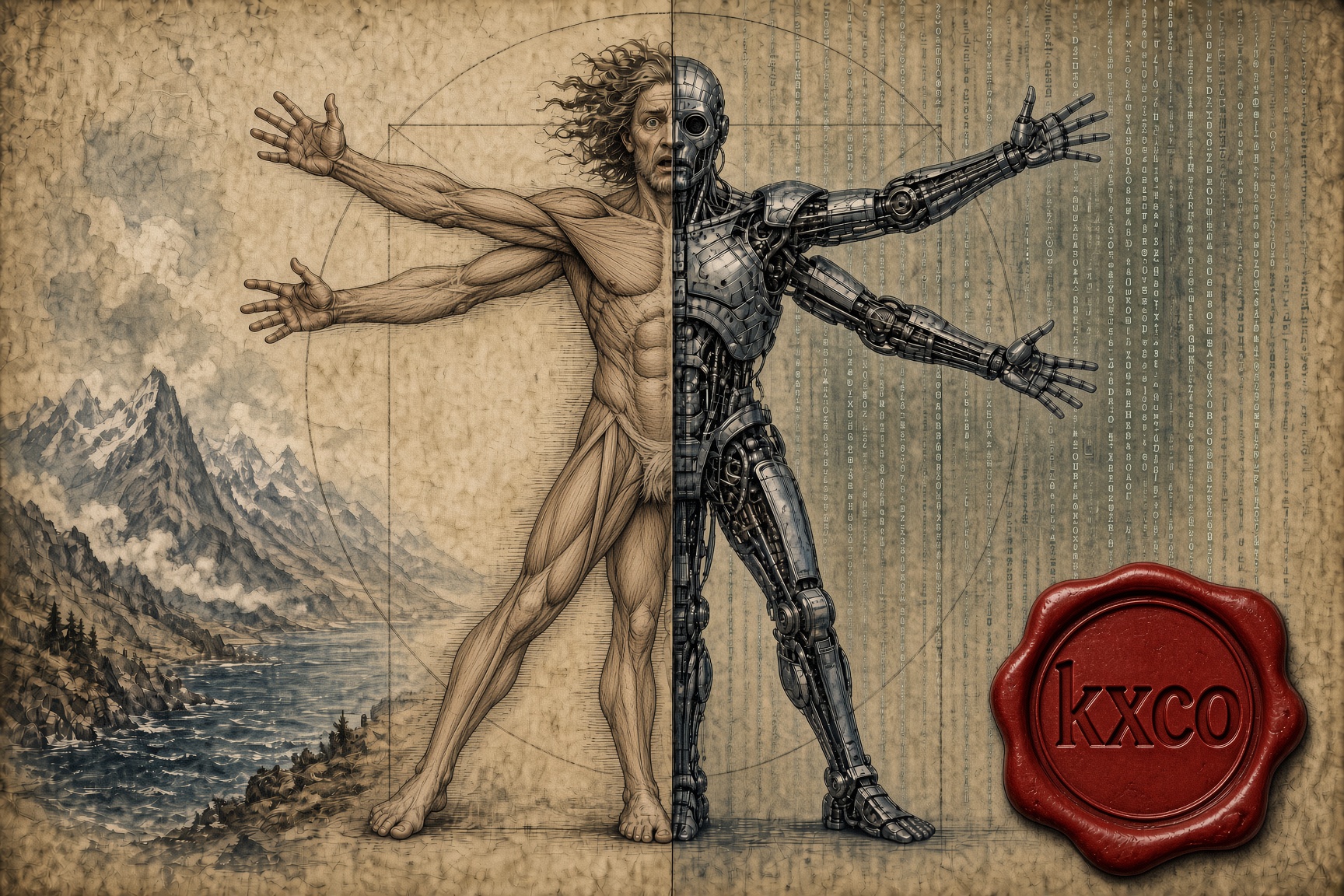
Don't Be the Best, Be the Only: Winning in an AI World
AI is repricing competence downward. What it cannot reproduce is a life. The case for remaining non-fungible, why friction still produces the best ideas, and what it means to build AI systems that keep the human intellect in them.
Every story, signed and delivered.
Subscribe to the kxco channel and get the headline, the AI-written key takeaways, and the chain-anchor link the moment we publish. Audio versions and per-ticker subscriptions arrive in the next iteration.