
Knightsbridge Digital Asset: Expanding Use Cases in a Dynamic Financial Ecosystem
Knightsbridge Digital Asset: Expanding Use Cases in a Dynamic Financial Ecosystem
By Shayne Heffernan
Knightsbridge is making waves in the digital finance space with the continued expansion of Knightsbridge Digital Asset (KDA), a utility token that’s becoming increasingly integral to a growing array of applications. As Knightsbridge rolls out new apps, Progressive Web App (PWA) platforms, derivative smart contracts, on-chain funds, ETFs, and exchange platforms, KDA’s use cases are evolving rapidly, offering investors and users versatile ways to engage with the digital economy. With KDA currently available for trading exclusively on XT at https://www.xt.com/en/trade/kda_usdt, Knightsbridge is positioning itself as a leader in bridging traditional and digital markets.
KDA serves as the native currency within the Knightsbridge ecosystem, enabling seamless transactions across a wide range of products and services. One of its core functions is facilitating access to Knightsbridge’s offerings, such as purchasing shares in upcoming IPOs planned for Europe, the UK, or Hong Kong, as well as acquiring real estate assets and other services within the Knightsbridge portfolio. Built on the XT Smart Chain, KDA ensures efficiency, security, and low transaction fees, making it a practical choice for users navigating this ecosystem. The recent launch of Knightsbridge’s blockchain on both mainnet and testnet, accessible at kxcoscan.com, marks a significant milestone, allowing the integration of all applications and superapps, including the new PWA platform that offers a seamless, browser-based user experience across devices without the need for downloads.
The introduction of derivative smart contracts and on-chain funds is expanding KDA’s utility further. Knightsbridge’s smart contracts enable sophisticated use cases like tokenized real estate, where ownership can be fractionalized and traded securely, as well as decentralized finance (DeFi) protocols that offer yield generation with transparency. On-chain funds and ETFs, accessible through Knightsbridge’s ecosystem, allow users to invest in diversified portfolios of digital assets, including tokenized securities and Bitcoin products, all manageable via the Knightsbridge Digital Wallet. These offerings cater to the growing demand for decentralized investment solutions, with the global tokenized asset market projected to reach $10 trillion by 2030, reflecting the trend toward fractional ownership and 24/7 liquidity.
Knightsbridge is also enhancing its exchange platforms, providing a secure environment to trade, settle, and clear a variety of digital assets at competitive rates. KDA plays a central role here, serving as a medium of exchange for transactions and fees within these platforms. The ability to trade KDA on XT opens up opportunities for investors to engage with Knightsbridge’s ecosystem, while the company’s focus on custom solutions—such as white-label projects and bespoke blockchain applications—ensures that businesses can tailor these tools to their specific needs. At Knightsbridge, we’re committed to supporting this digital revolution, and as we continue to roll out these innovative solutions, I look forward to seeing how KDA’s growing use cases will shape the future of finance on a global scale.
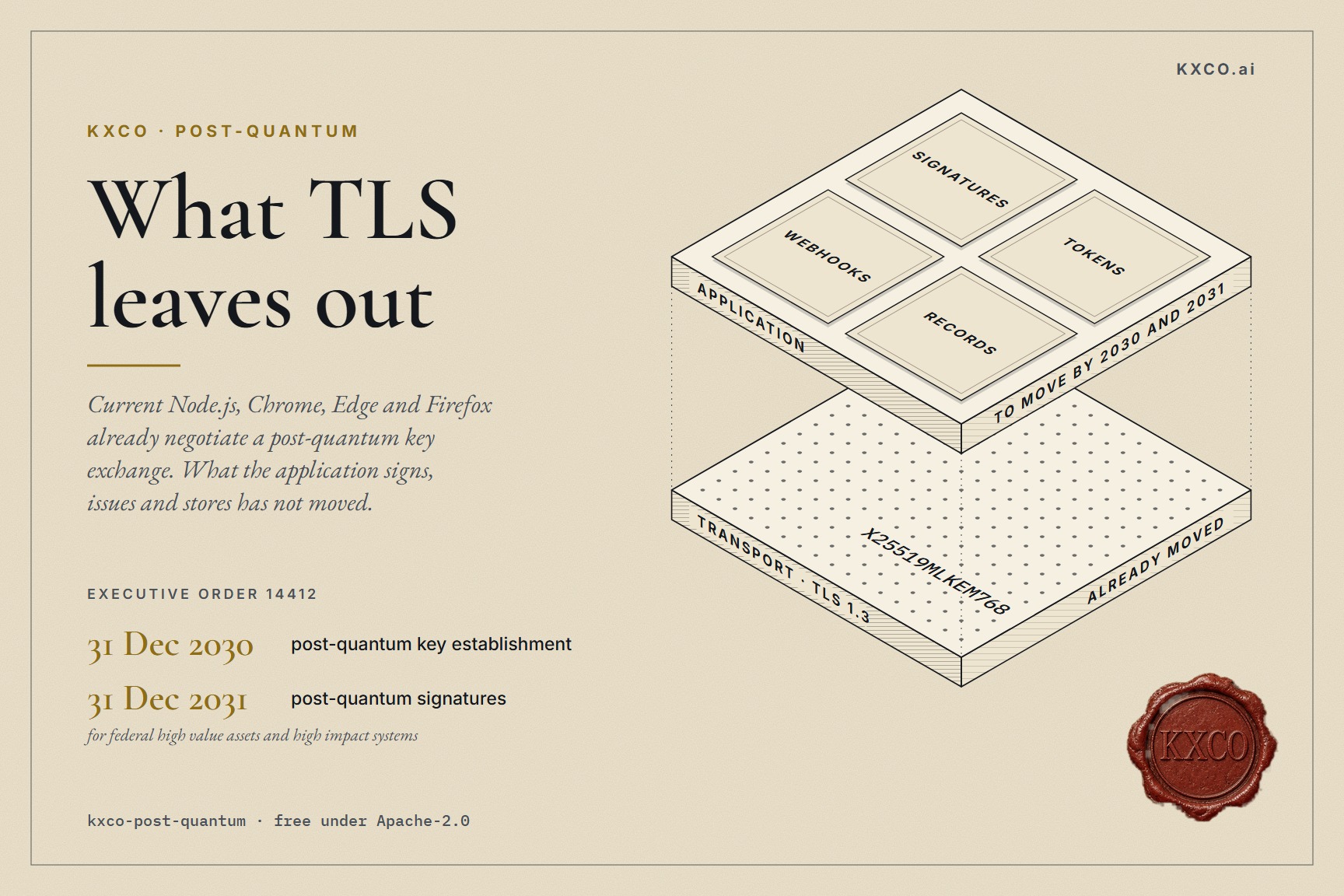
KXCO's Free Post-Quantum Library Covers What TLS Leaves Out
TLS already moved: current Node.js releases and the major browsers negotiate a hybrid post-quantum key exchange. What an application signs, issues and stores has not. Executive Order 14412 sets 31 December 2030 for post-quantum key establishment and 31 December 2031 for signatures in federal high value systems. kxco-post-quantum is KXCO's free Apache-2.0 library for that layer, tested against NIST's vectors. KXCO sells only the operated part: a live answer on whether a key is still trusted.
Tokenisation and RWA With KXCO: ML-DSA-87 on Chain, Verifiable by Anyone
Armature, KXCO's chain, has verified ML-DSA-87, the highest security category in NIST FIPS 204, natively on chain since 6 October 2026, and KXCO's platform signing keys moved to it on 6 and 7 October. Regulators now name tokenisation a supervisory priority, and DORA already requires cryptography that can change with cryptanalysis. Six tests an institution should run before it trusts a tokenisation platform, and where to check KXCO's answer to each.
KXCO Pay Is Live: WooCommerce Crypto Payments Straight to Your Own Wallet
KXCO Pay 1.0.0 went live on WordPress.org on 7 October 2026. It adds Bitcoin, Ether, USDT and USDC to WooCommerce, and the customer pays the merchant's own address. The plugin holds no funds and no keys: it reads the chain through public services, prices each order from CoinGecko, locks the rate and settles the order once the payment confirms. A shortcode, a block and a REST API take payment on any page. Free under the GPL, with no commission on any payment.
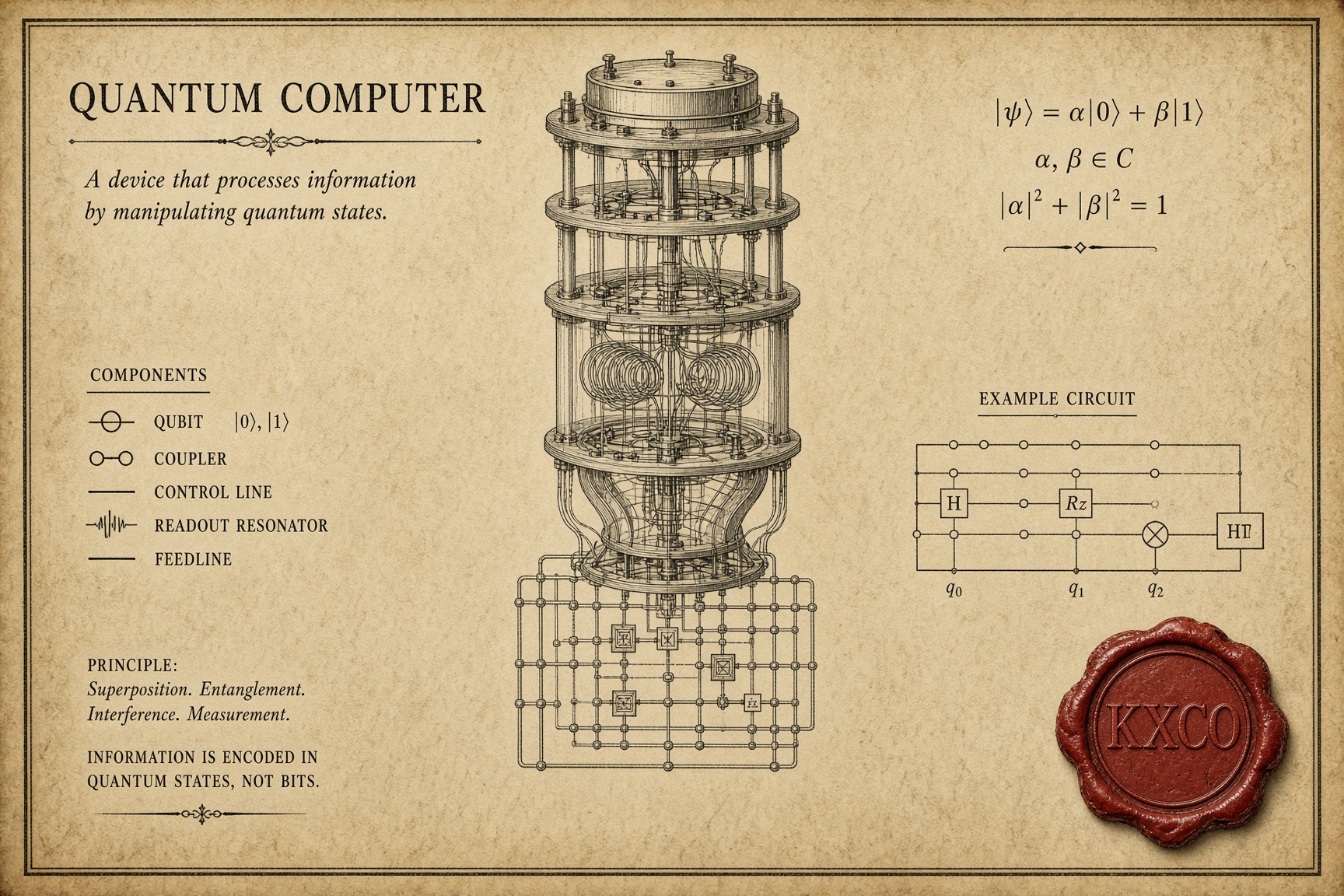
How ML-DSA-87 Opens the Door to Government Contracts
Government contracts turn on a written question: which algorithm, at which parameter set? The NSA names ML-DSA-87 for every classification level of US national security systems, and new acquisitions must meet that suite from 1 January 2027. Australia's ISM prefers it. Executive Order 14412 puts NIST's post-quantum standards into federal contracting by 2030. KXCO's chain has checked ML-DSA-87 in consensus since 6 October 2026, and on 7 October KXCO moved its own signing keys to it.
Every story, signed and delivered.
Subscribe to the kxco channel and get the headline, the AI-written key takeaways, and the chain-anchor link the moment we publish. Audio versions and per-ticker subscriptions arrive in the next iteration.