
China Blockchain Market
Blockchain technology has gained significant attention in recent years due to its potential to revolutionize industries such as finance, healthcare, and supply chain management. China has emerged as a leading player in the global blockchain landscape, with a strong focus on blockchain adoption and development.
In China, blockchain technology is considered a strategic priority for the country's digital transformation, with the government promoting its adoption and investment in blockchain research and development. The Chinese government has been vocal about the potential of blockchain technology to enhance data security, increase transparency, and improve efficiency in various industries.
One of the major initiatives taken by the Chinese government in this regard is the Blockchain-based Service Network (BSN), which was launched in 2020. The BSN is a global infrastructure network that provides developers with a low-cost and easy-to-use platform to create blockchain-based applications. The BSN aims to promote the development and adoption of blockchain technology in various industries, including finance, supply chain management, and healthcare.

The Chinese government has also launched several other initiatives to promote blockchain development in the country. For example, in 2020, the Chinese government announced the establishment of a blockchain-focused investment fund, which is aimed at supporting the development of blockchain technology and startups in the country.
Apart from government initiatives, Chinese businesses are also adopting blockchain technology to improve their operations. For example, Alibaba's Ant Financial, which is one of the world's largest financial technology companies, has been actively using blockchain technology to improve the efficiency of its supply chain operations. Ant Financial has also launched a blockchain-based platform for cross-border payments.
Another notable example is the Chinese insurance industry, which is increasingly adopting blockchain technology to improve its operations. For example, Ping An Insurance, one of China's largest insurance companies, has been using blockchain technology to streamline its claims settlement process and reduce fraud.
Despite the progress made in blockchain adoption in China, there are still challenges to be addressed. One of the major challenges is the lack of a unified regulatory framework for blockchain technology. The Chinese government has taken steps to regulate the blockchain industry, but there is still a need for a comprehensive and coherent regulatory framework that can provide clarity and guidance to businesses and investors.
Another challenge is the lack of standardization in the blockchain industry. There are numerous blockchain platforms and protocols available, each with its own advantages and disadvantages. This can create confusion for businesses and investors who are looking to adopt blockchain technology.
In conclusion, China has emerged as a leading player in the global blockchain landscape, with a strong focus on blockchain adoption and development. The Chinese government has launched several initiatives to promote blockchain development, and businesses in the country are increasingly adopting blockchain technology to improve their operations. However, there are still challenges to be addressed, such as the need for a unified regulatory framework and standardization in the blockchain industry. With continued investment and innovation, the future of blockchain technology in China looks promising.

Digital Erasure, and Why KXCO Matters
Pew found 38 percent of 2013's web pages gone a decade later, and quantum computing will eventually let attackers forge the signatures that prove records authentic. Why durable history now depends on post-quantum cryptography, on-chain anchoring and verification that needs nobody's permission.

Understanding the US China AI and Quantum Landscape
AI and quantum are usually reported as a US–China race. The more useful story is two different systems — frontier capital versus open-source scale — entangled through shared chokepoints. Shayne Heffernan maps the landscape with the KXCO AI Sector Ontology, with comparison graphics and the investable names.
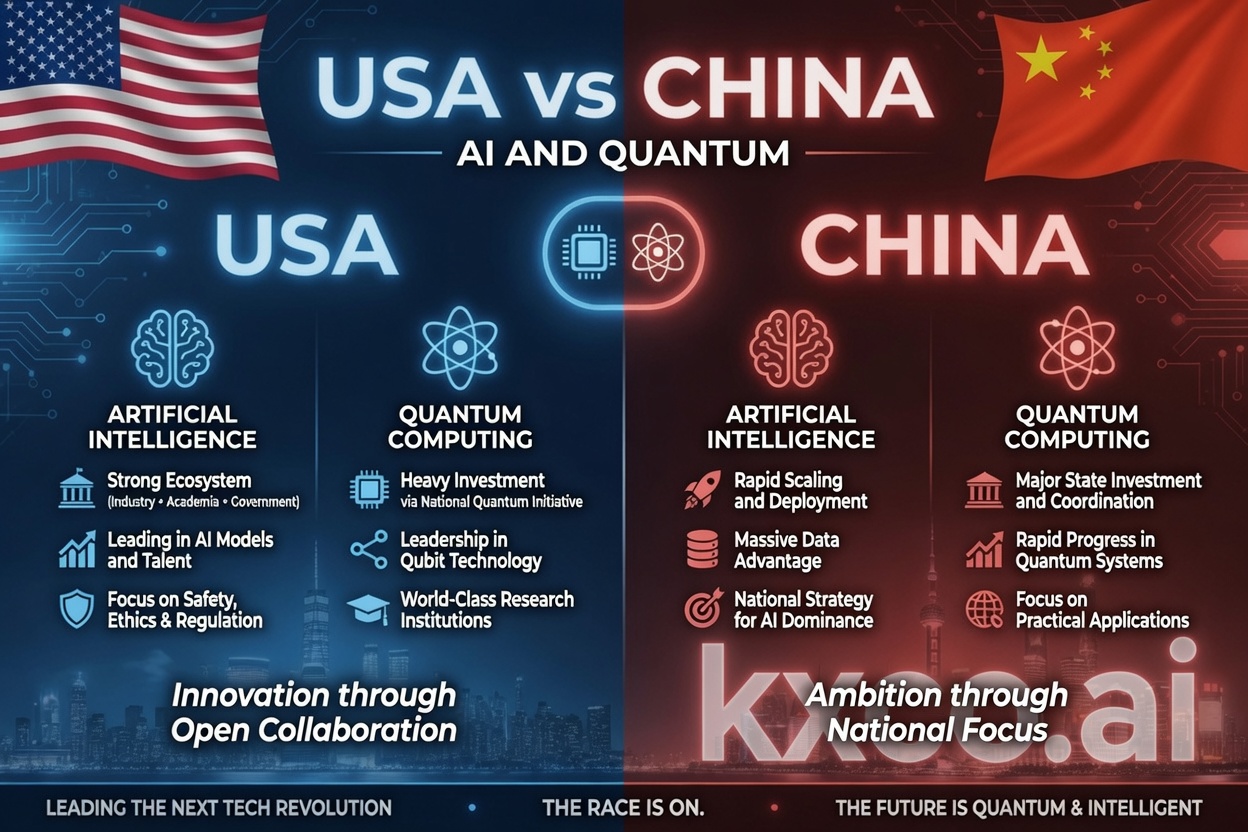
USA vs China: The AI and Quantum Scorecard
The US still leads AI models and chips by a whisker; China leads power and open-weight models outright. Shayne Heffernan scores the four races that will decide the decade.

Palantir Stock (PLTR): BUY Rating, $250 Price Target — The 40% Dislocation
Palantir is down ~40% in 2026 even as Q1 revenue grew 85% and management guided FY2026 to $7.66B. Shayne Heffernan issues a BUY on PLTR with a $250 price target — full breakdown of the business, customers, five-year revenue, every major Wall Street bank target and the corporate outlook.
Every story, signed and delivered.
Subscribe to the kxco channel and get the headline, the AI-written key takeaways, and the chain-anchor link the moment we publish. Audio versions and per-ticker subscriptions arrive in the next iteration.