
Knightsbridge: Pioneering a Comprehensive Digital Asset Ecosystem in 2025
Knightsbridge: Pioneering a Comprehensive Digital Asset Ecosystem in 2025
By Shayne Heffernan
The digital asset landscape is evolving rapidly, and stablecoins are at the forefront of this transformation, as highlighted in Fireblocks’ recent State of Stablecoins 2025 report. With stablecoin transactions on Fireblocks reaching $40 billion per quarter and global payments increasingly shifting toward blockchain-based solutions, the demand for robust, end-to-end ecosystems has never been greater. At Knightsbridge, we’re meeting this demand head-on by offering a total environment—from chain to wallet and beyond—designed to empower businesses and individuals in the digital economy.
Our ecosystem at Knightsbridge is built to be seamless and comprehensive. We’ve developed the Knightsbridge Chain, a secure and scalable blockchain infrastructure that underpins all our solutions. Paired with the Knightsbridge Digital Wallet, users can manage their digital assets, including our utility token, Knightsbridge Digital Asset (KDA), with ease and confidence. But we don’t stop there—our Progressive Web App (PWA) ensures accessibility across devices, creating a user-friendly experience that bridges the gap between traditional finance and the digital world. This total environment allows us to support clients at every step, whether they’re conducting transactions, storing value, or exploring new financial opportunities.
What sets Knightsbridge apart is our ability to build custom solutions tailored to specific needs. Whether it’s a financial institution looking to integrate stablecoin payments or a corporate entity seeking to tokenize assets, we can design and deploy bespoke solutions on our chain. Our team works closely with clients to understand their goals, leveraging our technology to create everything from streamlined payment systems to intricate smart contract frameworks. This flexibility ensures that businesses can innovate without being constrained by one-size-fits-all platforms, a critical advantage in a market where adaptability is key.
At Knightsbridge, we’re not just focused on stablecoins for transactions—we’re pushing the boundaries of what digital assets can do. While stablecoins are ideal for fast, low-cost payments (a trend Fireblocks notes as a key driver for 2025 adoption), we’re also creating complex smart contracts to store and manage value in more sophisticated ways. These smart contracts enable use cases like tokenized real estate, where ownership can be fractionalized and traded securely, or decentralized finance (DeFi) protocols that offer yield generation with transparency and security. By combining stablecoins with advanced smart contract functionality, we’re building a future where digital assets are not just a medium of exchange but a powerful tool for wealth creation and preservation.
As the global payments industry continues to embrace blockchain, Knightsbridge is positioned to lead with a holistic, customizable, and forward-thinking approach. Our ecosystem—from the Knightsbridge Chain to our wallet, PWA, and beyond—empowers users to navigate the digital economy with confidence, while our focus on custom solutions and complex smart contracts opens up new possibilities for innovation. In a world where infrastructure determines success, as Fireblocks aptly points out, Knightsbridge is ready to shape the future of finance.
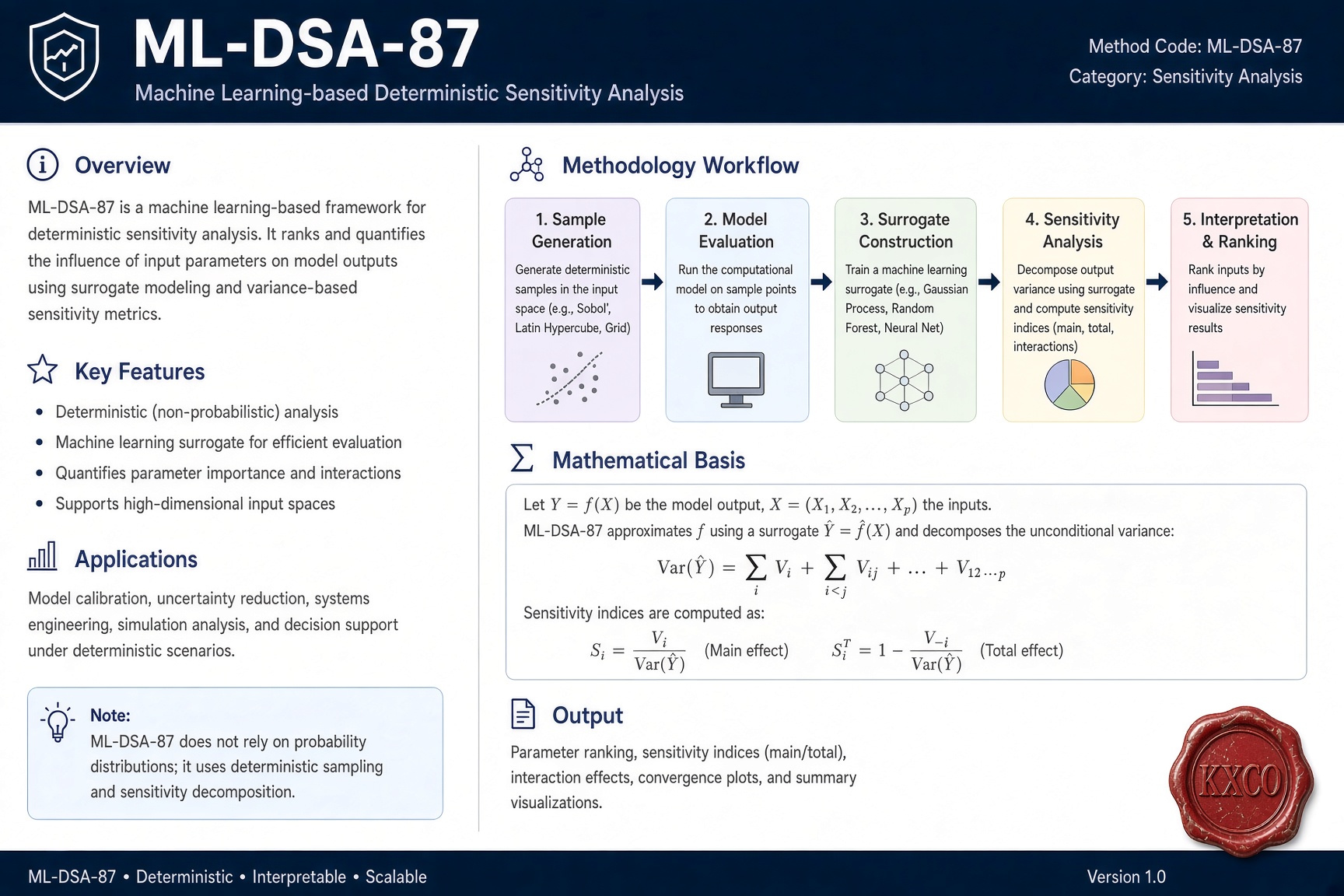
KXCO Now Verifies ML-DSA-87 in Consensus, the Signature Level Named by the NSA
On 6 October 2026 KXCO's chain began verifying ML-DSA-87 signatures as a rule of consensus, and the first ML-DSA-87 identity registered 28 seconds later. ML-DSA-87 is the category 5 level of NIST's FIPS 204, specified by the NSA for US national security systems and preferred by Australia's Information Security Manual. KXCO ships it for signing and for keys held in hardware, accepts it across its network and verifies it on chain, and anyone can check a verdict.
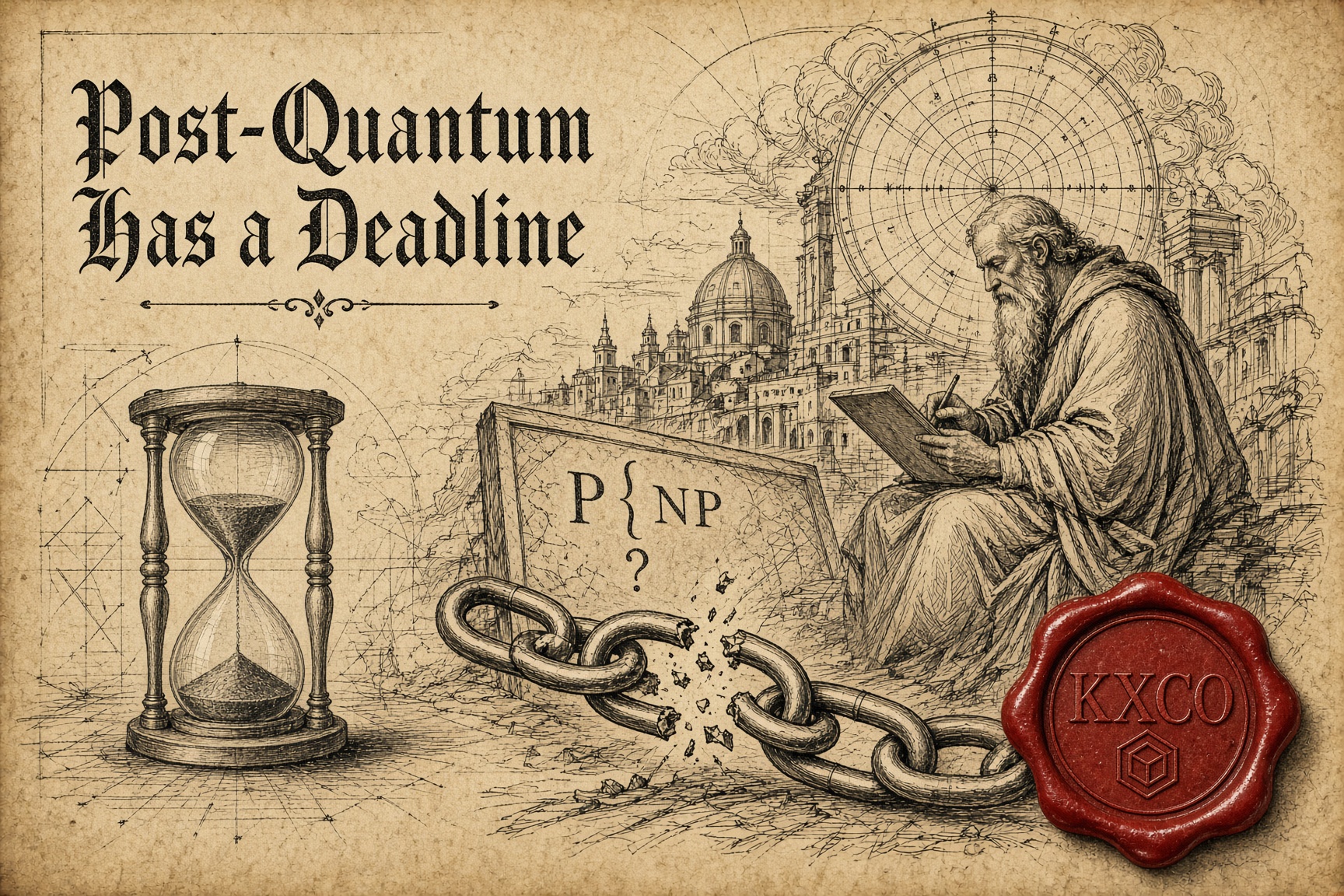
Post-Quantum Has a Deadline: 2030 for Keys, 2031 for Signatures
Executive Order 14412 gives federal high-value systems until 31 December 2030 for post-quantum key establishment and until 31 December 2031 for signatures. Six of the seven official calendars put a milestone in 2030. The Order reaches vendors through the contract, the purchase, the build, the data and the inventory. The runtimes already moved: a stock Node.js client negotiates X25519MLKEM768 by default. What is left is in the application.
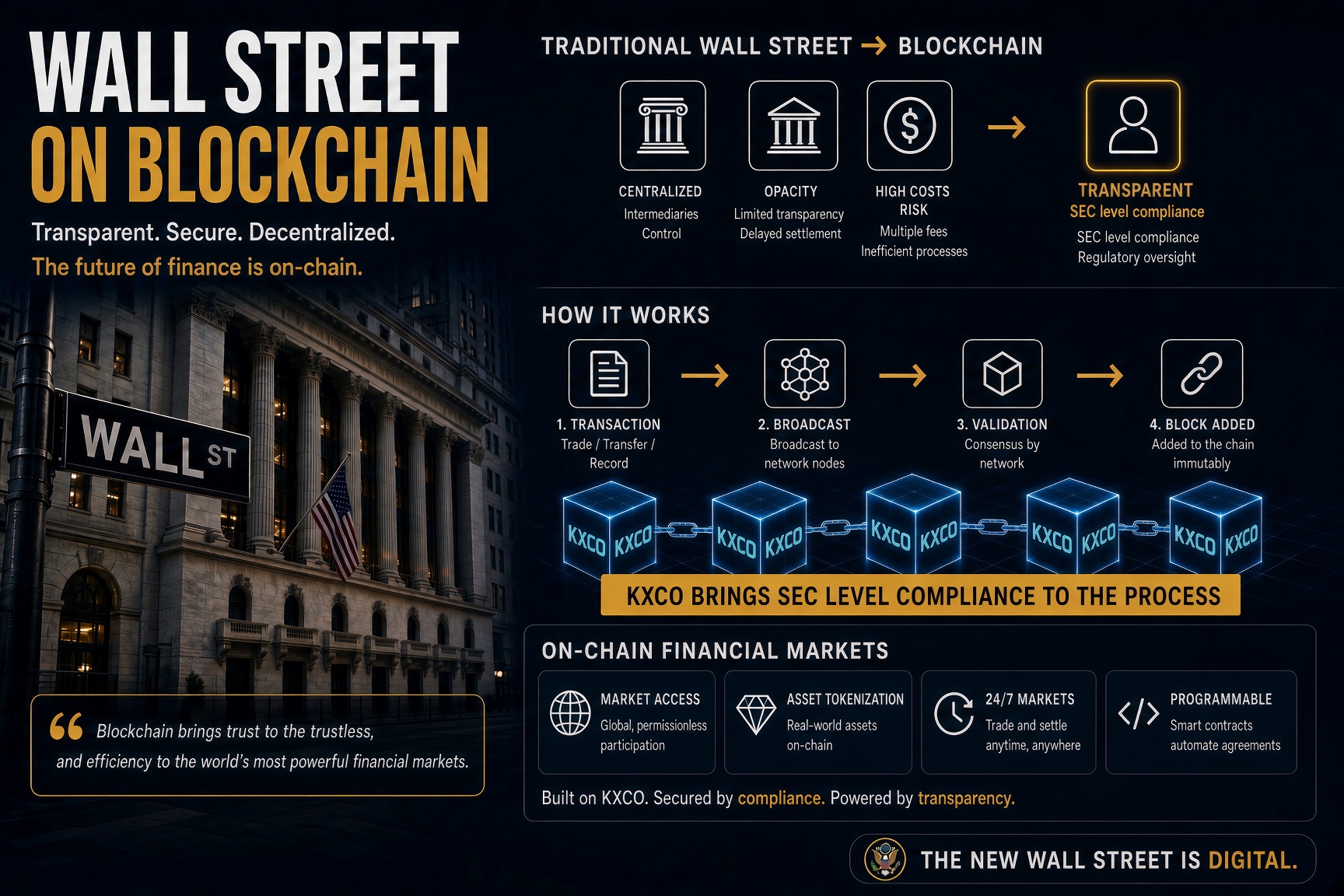
Tokenising a Share in Code: the Register Entry, the Credential and 4 Checks
The SEC has said what a tokenised share's record must hold: wallet, quantity and issue date on chain, the holder's name off chain, permissioned participants, and the same dividends as the share. This developer note builds it in JavaScript: an ML-DSA-65 signed register entry, a stranger's check, the same check at Armature's 0x0b precompile, a credential gate and an exact dividend at a record date.
The 2030 Post-Quantum Deadline in Code: 6 Changes and the Test for Each
A stock Node.js client already negotiates X25519MLKEM768, so TLS 1.3 took the first post-quantum step on its own. Nothing the application owns has moved. This developer note reads Executive Order 14412 and OMB M-26-15 as six changes: ML-KEM key establishment, ML-DSA signatures, a one-import move to Category 5, PQC-signed JWS at the gateway, re-encryption of long-lived data and a CycloneDX CBOM from the lockfile. Every block was run against the published packages.
Every story, signed and delivered.
Subscribe to the kxco channel and get the headline, the AI-written key takeaways, and the chain-anchor link the moment we publish. Audio versions and per-ticker subscriptions arrive in the next iteration.